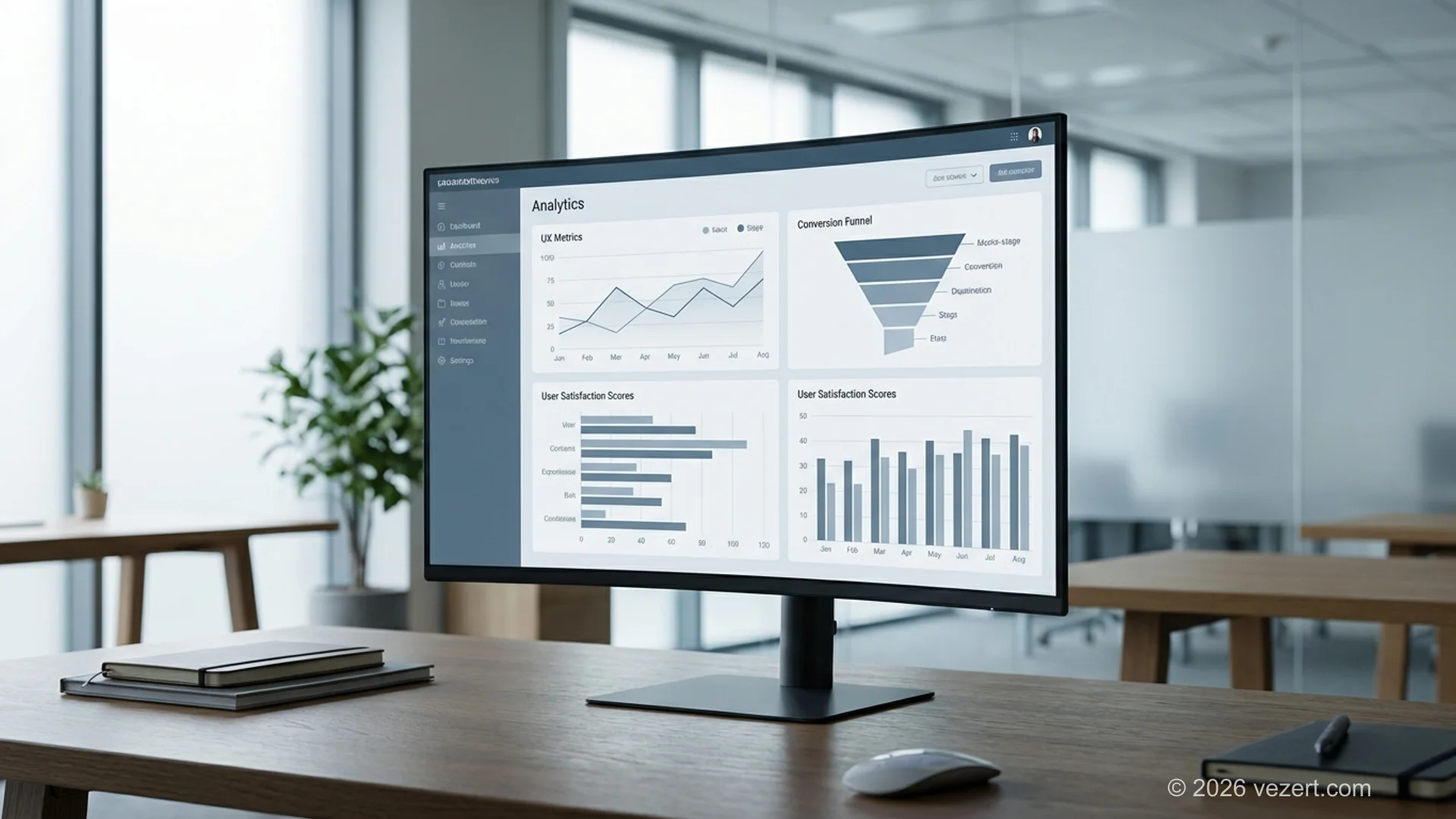


UI/UX design services are the research, wireframing, visual design, and testing work needed to turn a product idea, or a struggling existing product, into an interface people can actually use without friction. If you've decided you need outside help and you're now comparing agencies, process, and price tags, this is the buyer's guide: what a real engagement includes, what it costs, and how to separate an agency that ships outcomes from one that ships pretty mockups.
That question sits downstream of understanding UX itself. If you're still figuring out which metrics prove design work is paying off, our UX metrics guide covers task success rate, NPS, and Core Web Vitals in detail. This article picks up from there: once you know what good UX looks like on a dashboard, who builds it, what it costs, and how to pick the right partner.
Most teams shopping for UI/UX design services fall into one of two camps. Either a product already exists and something in the funnel is broken, signup abandonment, a support queue full of "how do I" tickets, a redesign that quietly hurt conversions, or the team is building something new and knows that guessing at layout and flow is a more expensive mistake than paying for design upfront. Both paths lead to the same set of decisions: which services, from which agency, at what cost. Let's work through it.
What UI/UX Design Services Include
A UI/UX design service is a bundle of research, structural, and visual work, typically scoped as a project engagement rather than an ongoing retainer. Agencies package the work differently, but almost every legitimate offering covers the same core disciplines, just at different depths depending on your product's stage and budget.
UX research and strategy:
- User interviews and surveys, direct conversations with real or prospective users to surface actual pain points instead of assumed ones.
- Competitive and heuristic analysis, a structured review of competitor products and your own against established usability principles.
- User personas and journey mapping, documenting who uses the product and where they currently get stuck.
- Information architecture, the site map and navigation logic that determines whether users can find what they need.
UX design (structure and flow):
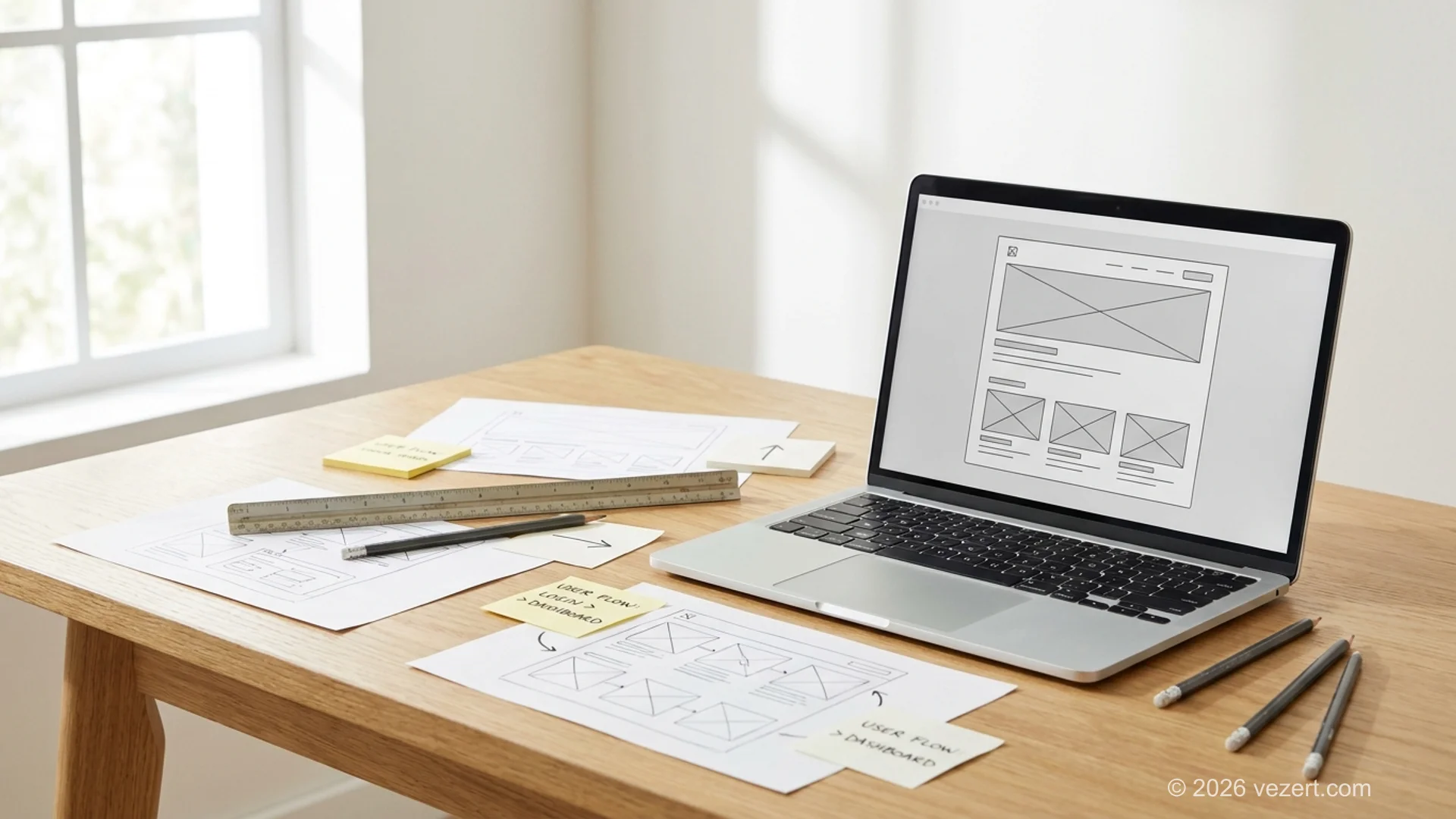
- Wireframes, low-fidelity layouts that lock in structure and hierarchy before anyone worries about color.
- User flow diagrams, mapping every step a user takes to complete a core task, and every place that flow can break.
- Prototyping, clickable mockups that simulate the real experience for stakeholder review and usability testing.
- Usability testing, watching real users attempt real tasks against the prototype, then revising based on what actually goes wrong.
UI design (visual execution):
- Visual design, color, typography, spacing, and imagery applied on top of the validated structure.
- Design systems, a reusable component library and token set that keeps every screen consistent as the product grows.
- Responsive and accessibility design, layouts that hold up across devices and meet WCAG 2.2 standards, not just a desktop mockup that gets awkwardly squeezed onto mobile.
- Developer handoff, specs, assets, and component documentation clean enough that engineering doesn't have to guess at spacing or states.
The honest way to evaluate an agency's service page is to check whether they're selling you all three layers, research, UX structure, and UI polish, or just the last one. A portfolio full of attractive screens tells you almost nothing about whether the underlying flow was ever tested with a real user.
How to Choose a UI/UX Design Agency
How you choose a UI/UX design agency matters more than which specific package you sign, because a strong agency on a narrow scope will still flag the gap, while a weak agency on a generous budget will still ship shallow work. A handful of questions separate the two before you sign anything.
Ask to see process artifacts, not just final screens. Any agency can show you a polished portfolio shot. Ask for the wireframes, user flow diagrams, or research synthesis that came before it. If they can't produce intermediate work, the final screens were likely designed on instinct rather than validated against real user behavior.
Ask how they measure success. A design agency worth hiring should ask about your target metrics, conversion rate, task completion time, support ticket volume, before proposing a single screen. If the sales conversation never mentions your KPIs, the engagement will likely optimize for aesthetics instead of outcomes.
Ask who actually does the work. Agencies vary widely in whether senior designers stay hands-on through delivery or hand off to junior staff after the pitch. Ask specifically who will run your discovery calls and who will execute the actual screens, and whether that's the same person.
Ask about their testing process. Do they run usability tests with real users before final handoff, or do they rely on internal review and stakeholder opinion? Internal review catches obvious problems; only testing with actual users catches the ones that matter.
Check their experience with your product type. A team with 80+ SaaS products in their history brings pattern recognition, pricing page conventions, onboarding flow benchmarks, that a generalist agency has to rediscover from scratch on your dime. If your product is closer to a marketing site than an app, our SaaS website design guide covers the adjacent discipline of designing for signups and conversion rather than in-product workflows.
Ask what happens after handoff. A design system with no ownership plan degrades within two product cycles as new screens get built without matching the original tokens. Ask whether the agency offers any post-launch design QA or whether the relationship simply ends at delivery.
Portfolio Screenshots Are the Least Useful Part of a Pitch
According to Vezert's own client discovery calls, the single question that best predicts a successful engagement isn't "show me your best work," it's "walk me through a project where the first design direction was wrong and what you did next." Agencies with a real process have an answer. Agencies selling a template have a portfolio and not much else.
How Much Do UI/UX Design Services Cost?
UI/UX design services typically run from around $5,000 for a narrow, single-flow engagement up to $45,000 or more for a full product design system built by senior designers, with most small-to-mid-size product teams landing somewhere between $10,000 and $30,000 for a defined project. According to Clutch's design agency pricing research, UX design engagements at established agencies commonly range from $5,000 to $50,000 depending on scope, seniority of the team, and how much research is included versus assumed.
Here's how the ranges break down by engagement type:
- UX audit or single-flow redesign: $5,000-$12,000. Covers a focused review or redesign of one critical flow, checkout, onboarding, or a signup funnel, usually delivered in two to four weeks.
- Full product UX/UI design (new product or major redesign): $15,000-$35,000. Includes research, information architecture, wireframes, hi-fi UI, and a starter design system.
- Enterprise design system + multi-product rollout: $30,000-$45,000+. Covers a complete token-based design system applied across multiple products or a large application surface, with accessibility and dev-handoff documentation built in.
- Ongoing design retainer: $3,000-$10,000/month. For teams that need continuous design support as new features ship, rather than a single fixed-scope project.
What actually moves the number:
- Research depth. A project that includes real user interviews and usability testing costs more upfront than one based on assumptions, but it also costs less to fix later, since flawed structure caught in wireframes is far cheaper to correct than flawed structure caught after launch.
- Seniority of the team. A senior-designer-led engagement costs more per hour than a junior team, but typically needs fewer revision cycles to reach a workable result.
- Design system scope. A one-off screen design is a fraction of the cost of a full, documented, reusable component system meant to scale across a product roadmap.
- AI-accelerated workflows. Some agencies now use AI tools inside the design process itself, to generate wireframe variations or automate design-system token audits, which can meaningfully compress the timeline without cutting the number of senior review gates. That shows up as a faster delivery date more often than a lower price, since the senior oversight, not the tooling, is what you're actually paying for.
The Lowest Quote Often Skips Research
A UI/UX quote priced well below the market range for your product's complexity usually means the agency is skipping user research and usability testing, working from assumptions and internal opinion instead. That shows up later as a design that looks finished but tests poorly with real users, at which point you're paying for a second round of work the first quote should have priced in from the start.

What the UI/UX Design Process Looks Like
A real UI/UX design process runs through a fairly consistent sequence, regardless of which agency you hire, though the depth at each stage varies with budget and product complexity. Knowing the stages helps you spot a shortcut before you've paid for it.
1. Discovery and strategy. A senior designer or strategist runs sessions to frame the actual problem, your target KPIs, and your user segments, before any screen gets drawn. Skipping this stage is the single most common reason a design engagement misses the mark.
2. Research synthesis. Interview transcripts, analytics, and support tickets get turned into an affinity map or a set of clear findings. This is where real pain points get separated from assumed ones.
3. Information architecture. Site maps and user flows get drawn against the research findings, establishing structure before anyone touches color or typography.
4. Wireframes and variations. Low-fidelity layouts get drafted, often in multiple directions, to lock in hierarchy and flow while changes are still cheap to make.
5. Hi-fi visual design. The winning direction gets taken to pixel-perfect polish: brand tokens, real content, and edge-case states like empty states, errors, and loading screens.
6. Design system and consistency. Reusable components and design tokens get documented so new screens stay consistent as the product grows, rather than drifting screen by screen.
7. Prototyping and usability testing. An interactive prototype gets assembled and tested with real users attempting real tasks, with findings folded back into the design before final handoff. Nielsen Norman Group's research on usability testing puts the number at five users per round to catch roughly 85% of usability problems, which is why most agencies test in small rounds rather than one large study at the end.
8. Accessibility and QA. Automated WCAG 2.2 checks plus a manual review of keyboard flow, contrast, and screen-reader behavior confirm the design works for everyone, not just the average user.
9. Developer handoff. Component specs, assets, and interaction documentation get delivered clean enough that engineering can build without guessing at spacing, states, or motion.
A legitimate proposal should be able to walk you through all nine stages and tell you which ones apply to your specific engagement. If a proposal jumps straight from a kickoff call to final screens, ask what happened to stages two through seven.
In-House vs. a UI/UX Design Agency
Whether to build a UI/UX design capability in-house or hire an agency comes down to a fairly narrow set of questions: how continuously you need design work, whether you can recruit and retain senior design talent, and whether your product's complexity justifies a full-time team.
In-house tends to work when:
- Your product ships new features often enough to keep one or more designers busy every week, not just in bursts.
- You can recruit and retain senior design talent at a competitive market rate, not just a junior hire learning on the job.
- Your product is complex or specialized enough that deep, continuous institutional knowledge outweighs fresh outside perspective.
- You have the management bandwidth to actually direct design work, rather than it defaulting to whoever's available.
A design agency earns its cost when:
- You need a defined, bounded engagement, a redesign, a new product launch, a design system, rather than continuous ongoing capacity.
- Recruiting and retaining senior in-house design talent is slower or more expensive than your timeline allows.
- You want the pattern recognition of a team that has solved similar problems across dozens of other products.
- Your current in-house team needs an outside audit or a second opinion because internal blind spots have gone unchecked too long.
The trade-off isn't really about design quality alone. Most experienced designers can produce solid work in either setting. It's about whether your product's cadence and budget favor continuous in-house capacity or a bounded external engagement with senior oversight built in. Plenty of teams land on a hybrid: an agency handles the initial system and major redesigns, while a smaller in-house team maintains it day to day.
Signs Your Business Needs UI/UX Design Services
Some teams know they need design help because something visibly broke. Others are still deciding, and the signs are quieter than a support-ticket spike. According to Forrester's research on UX investment returns, every dollar invested in UX typically returns around one hundred dollars, a ratio few other line items on a product budget can match. A handful of patterns reliably mean it's time to bring in UI/UX design services rather than patch the problem internally.
Your conversion funnel has an unexplained drop-off. If analytics shows a consistent percentage of users abandoning at the same step, checkout, signup, onboarding, and your team has already ruled out technical bugs, that's a design problem, not an engineering one. Our UX metrics guide walks through how to confirm it's structural before you commission a redesign.
Support tickets keep asking the same "how do I" question. A recurring support question about a feature that technically works usually means the interface isn't communicating how to use it, a UX problem dressed up as a documentation gap.
Your product looks inconsistent screen to screen. If every new feature gets its own button style, spacing logic, or color choice because there's no documented design system, the product is accumulating design debt that gets more expensive to unwind with every release.
A past redesign didn't move the numbers it was supposed to. Bad UX quietly erodes SEO, conversions, and user trust even when a site looks modern, and a redesign built on aesthetics alone, without research or testing, can ship a prettier product that performs no better, or worse, than the one it replaced.
You're about to raise a funding round or enter a new market. Investors and new market segments both scrutinize product polish and usability more closely than an established, comfortable user base does. A gap that longtime users have learned to work around becomes a first-impression problem for everyone else.
Nobody on your team owns UX as a real responsibility. If design currently happens as a side task for a product manager or a developer with an eye for layout, the product is getting attention, not expertise, and the gap between the two tends to show up right where it costs the most: the moments a user decides whether to keep going or leave.
If two or more of these sound familiar, the cost of waiting is rarely holding steady. It's usually compounding quietly in a metric nobody's watching closely enough yet.