

On This Page
- Why a UX Audit Starts With Your Search Rankings
- How Bad UX Destroys Your SEO Rankings
- How UX Affects SEO Rankings: Core Web Vitals Benchmarks
- Why Bounce Rate and Dwell Time Signal Bad UX to Google
- The Conversion Tax: What Bad UX Costs You in Revenue
- Page Speed and Form Design: The Biggest Conversion Killers
- Navigation and CTA Impact on Conversions
- Trust: The Invisible Casualty of Bad UX and Poor SEO Signals
- What Kills Trust and Triggers the Bad UX SEO Spiral
- The Bad UX SEO Timeline: When Google Started Penalizing Poor Experiences
- Key Milestones in Google's UX-Driven Algorithm Updates
- What a UX Audit Finds Most Often: the 7 Usual Problems
- What UX SEO Requires: Speed, Navigation, and Mobile Responsiveness
- Content Hierarchy, CTAs, Forms, and Design Consistency
- What an Agency UX Audit Delivers and What It Costs
- How to Run a UX Audit in Five Steps
- UX Audit Steps 1 to 3: Data, Observation, Mobile
- UX Audit Steps 4 and 5: Speed and Journey Mapping
- Building UX That Scales: Beyond Quick SEO Fixes
- Stop Bleeding Revenue to Bad UX
Bad UX is a silent revenue killer. Your website might look decent on the surface, polished visuals, decent traffic numbers, maybe even a few awards on the shelf. But if users can't find what they need, if pages load like it's 2012, or if the checkout flow makes people want to throw their laptop out a window, none of that matters. Bad UX destroys SEO rankings, tanks conversion rates, and erodes the trust you've spent years building.
I've seen it happen dozens of times with clients who come to us confused about why their traffic keeps climbing while their revenue flatlines. The answer is almost always the same: their user experience is working against them. Let's break down exactly how bad UX undermines your entire digital presence, and what you can do about it.
Why a UX Audit Starts With Your Search Rankings
UX SEO is the overlap between how a page feels to use and how Google ranks it, and ignoring that overlap is expensive. Here's a stat that should make every business owner sit up straight: 88% of users won't return to a website after a bad experience. Not "might not return", won't. That's nearly nine out of ten potential customers gone forever because of a confusing menu, a slow page, or a form that didn't work on mobile.
UX isn't just about making things "look nice." It's about how your website feels to use. It's the difference between a visitor who lands on your page and immediately understands what you offer, versus one who squints at the screen, clicks around aimlessly, and leaves within eight seconds. Google knows this. Your customers know this. The only people who don't seem to know it are the ones still treating UX as an afterthought.
User experience sits at the intersection of design, development, content strategy, and business goals. When it works, everything flows, your website navigation guides users naturally, your content resonates, and your conversions climb. When it doesn't, every other investment, your ad spend, your content marketing, your SEO budget, gets diluted.
The Cost of Bad UX
88% of online consumers are less likely to return to a website after a bad experience. Every friction point on your site is actively pushing potential customers toward competitors with better user experiences.
How Bad UX Destroys Your SEO Rankings
Google's algorithm has gotten remarkably good at measuring whether users actually enjoy being on your site. Core Web Vitals, Largest Contentful Paint (LCP), Interaction to Next Paint (INP), and Cumulative Layout Shift (CLS), are now confirmed ranking factors. These aren't abstract technical metrics. They measure exactly what users experience: how fast the page loads, how responsive it is when they click something, and whether elements jump around while the page renders.
How UX Affects SEO Rankings: Core Web Vitals Benchmarks
Here's what the numbers look like. Google wants your LCP under 2.5 seconds, your INP below 200 milliseconds, and your CLS score below 0.1. Miss those benchmarks, and you're handing ranking positions to competitors who didn't. According to Google's Web Vitals documentation, sites that pass all three thresholds see measurably better search performance.
Why Bounce Rate and Dwell Time Signal Bad UX to Google
It goes deeper than Core Web Vitals. When users land on your page and immediately bounce, Google notices. When dwell time drops because people can't find the information they came for, Google notices. The Baymard Institute research consistently shows that sites with poor usability patterns see bounce rates well above industry averages. A high bounce rate paired with low dwell time is essentially telling Google: "This page doesn't satisfy the search intent." And Google responds accordingly, by pushing you down the results.
Poor website architecture makes things worse. If your internal linking structure is a mess, if important pages are buried four clicks deep, or if your navigation doesn't match how users actually think, search engine crawlers struggle too. They can't find and index your content efficiently, which means some of your best pages might be invisible to search.
The Conversion Tax: What Bad UX Costs You in Revenue
Every friction point on your website is a tax on your conversion rate. And most businesses are paying that tax without even realizing it.
Page Speed and Form Design: The Biggest Conversion Killers
Consider page speed alone. According to research from Google, a mobile page that takes more than three seconds to load loses 53% of its visitors. And a one-second delay in load time can slash conversions by up to 20%. That's not a rounding error, that's a fifth of your potential revenue evaporating because your images aren't optimized or your server response time is too slow.
Then there's form design. I've audited sites where the contact form had 14 fields, required information most people don't have handy, and didn't even work properly on mobile. The business owner couldn't understand why nobody was filling it out. Cut it to five fields, make it mobile-friendly, and suddenly submissions triple. That's not magic, that's removing friction.
Trust: The Invisible Casualty of Bad UX and Poor SEO Signals
Trust is harder to measure than rankings or conversion rates, but it might be the most important thing your website builds, or destroys. Research from the Nielsen Norman Group shows that 94% of users form their opinion of a website based on its design alone, and they do it in roughly 50 milliseconds. Half a tenth of a second. That's all you get to make a first impression.
What Kills Trust and Triggers the Bad UX SEO Spiral
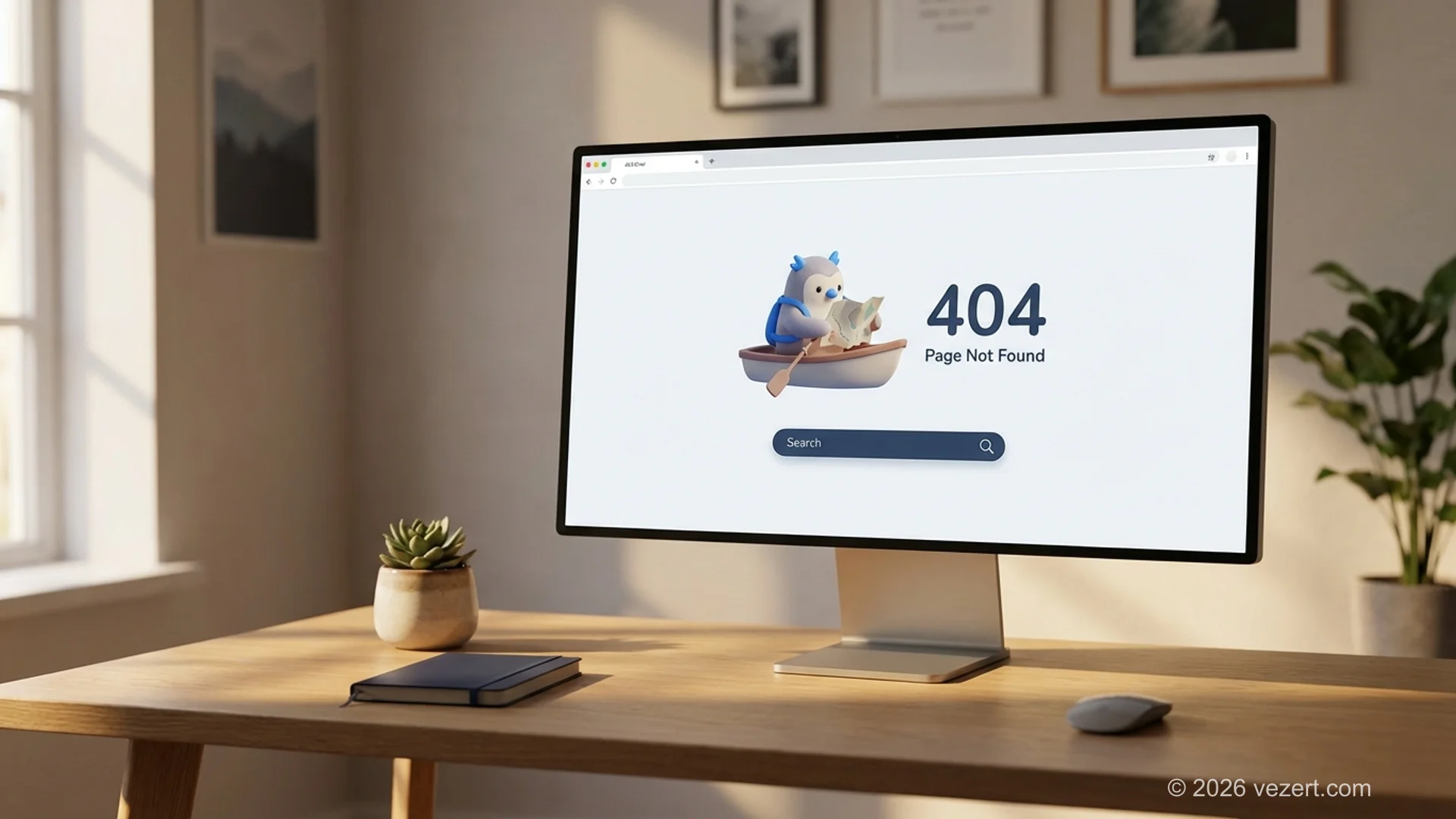
What kills trust? Outdated design, inconsistent branding, broken links, slow load times, and layouts that feel "off" even if the user can't articulate why. Even something as overlooked as a blank browser-default 404 page signals neglect, creative 404 error page design ideas can turn a dead end into a trust-preserving recovery point. When a website feels unreliable, visitors assume the business behind it is unreliable too. It doesn't matter if you have the best product in your market. If your site looks like it was built in 2018 and hasn't been touched since, people will question whether you're still in business at all.
And there's a compounding effect. A user who doesn't trust your site won't fill out your form. They won't call your number. They won't share your content. They certainly won't enter their credit card information. Every trust deficit translates directly into lost conversions, which, in turn, sends worse signals to search engines. It's a downward spiral where poor UX feeds poor SEO, which feeds lower traffic, which feeds lower revenue.
For businesses that handle sensitive data or financial transactions, the stakes are even higher. Security badges, SSL certificates, and professional design aren't optional, they're table stakes. But even those trust signals fall flat if they're placed on a page that otherwise looks amateur or disorganized. If you're building a corporate website, trust through design isn't a luxury, it's the foundation of every conversion.
Trust Takes Seconds to Lose, Months to Rebuild
Users form credibility judgments about your website in 50 milliseconds. Bad UX erodes trust instantly, and once lost, trust is extraordinarily difficult to rebuild. Every UX improvement you make compounds into stronger trust signals, for both users and search engines.
The Bad UX SEO Timeline: When Google Started Penalizing Poor Experiences
Understanding when and how Google evolved its stance on user experience helps explain why bad UX SEO penalties have become so significant. The shift didn't happen overnight, it was a gradual tightening of standards that accelerated dramatically after 2020.
Key Milestones in Google's UX-Driven Algorithm Updates
- 2010, Page speed becomes a ranking factor. Google first confirmed that site speed influenced desktop search rankings, marking the beginning of the UX-SEO convergence.
- 2015, Mobilegeddon. Google's mobile-friendly update started demoting sites that weren't responsive on mobile devices. For the first time, bad UX on mobile directly penalized your SEO.
- 2018, Speed Update for mobile. Google extended page speed as a ranking factor to mobile searches, which by then accounted for over 50% of all traffic.
- 2021, Core Web Vitals launch. Google officially added LCP, FID (later replaced by INP), and CLS as ranking signals in the Page Experience Update. This was the moment UX metrics became explicit SEO factors.
- 2024, INP replaces FID. Interaction to Next Paint replaced First Input Delay, raising the bar for interactivity. Sites with sluggish JavaScript or poorly optimized event handlers saw ranking drops.
- 2025–2026, AI-powered search and SGE. Google's Search Generative Experience prioritizes pages that deliver excellent user experiences, making bad UX an even greater SEO liability.
The trajectory is clear: Google has been systematically increasing the weight of UX signals in its algorithm for over a decade. Businesses that ignore this trend do so at their own peril.
What a UX Audit Finds Most Often: the 7 Usual Problems
After auditing hundreds of websites over the past five years, the same problems keep showing up. Here's my shortlist of the most damaging UX issues and their fixes.
Content Hierarchy, CTAs, Forms, and Design Consistency
4. Walls of text with no visual hierarchy. Break content into scannable sections. Use subheadings, bullet points, short paragraphs, and strategic white space. Guide the eye, don't overwhelm it.
5. Weak or missing CTAs. Every page should have a clear next step. Use action-oriented language, make buttons visually prominent, and match the CTA to the user's stage in the buying journey.
6. Poor form design. Ask only for information you actually need. Use inline validation, clear error messages, and progress indicators for multi-step forms. Auto-fill should work on mobile.
7. Inconsistent design patterns. When buttons, colors, and layouts change from page to page, it creates cognitive friction. Maintain a consistent design system across your entire site to build familiarity and trust. A professional UX/UI design process ensures these patterns are established from day one.
Is Bad UX Costing You Customers?
Our UX/UI design team identifies conversion killers and builds experiences that turn visitors into revenue. Get a free UX audit consultation.
Get a Free UX AuditWhat an Agency UX Audit Delivers and What It Costs
A do-it-yourself audit finds the obvious problems. A paid one finds the ones you have stopped seeing, which after two years on the same site is most of them.
What you should get for the money, in order of how much it matters:
- A ranked list of findings, not a list. Each item carries a severity and an estimate of what it costs. Twenty findings with no order is a document nobody acts on.
- Evidence per finding. A screenshot with the problem circled, a session recording, or a number from analytics. Opinions without evidence get argued away in the first review meeting.
- A fix per finding, sized. "Improve navigation" is not a fix. "Cut the top menu from nine items to five, move Careers and Press into the footer, two days of work" is.
- A retest date. An audit without a follow-up measurement is a report, not a change.
Market pricing splits by depth. A heuristic review of one flow runs €800 to €2,000 and takes about a week. A full audit with user testing on five to eight participants runs €4,000 to €12,000 and takes three to four weeks, most of it recruiting and scheduling. Anything quoted under €500 is a checklist someone ran through a tool, and you can run the same tool yourself in an afternoon.
We run a free UX audit for qualified teams, which in practice means a site with enough traffic that the findings can be measured afterwards. Below that, the honest answer is that you do not need an audit yet. You need more traffic, and the five steps above will find the worst problems without an invoice.
How to Run a UX Audit in Five Steps
You don't need to hire a consultant to identify the worst UX problems on your site. Here's a framework I use with our team at Vezert that you can apply right now.
UX Audit Steps 1 to 3: Data, Observation, Mobile
Step 1: Run the numbers. Pull up Google Analytics and look at your bounce rate, average session duration, and exit pages. High bounce rates on key landing pages are your biggest red flags. Check Google Search Console for Core Web Vitals issues, it'll tell you exactly which pages are failing and why.
Step 2: Watch real users. Tools like Hotjar or Microsoft Clarity let you record actual user sessions and build heatmaps. Watch where people click, how far they scroll, and where they drop off. Patterns emerge fast, and they're usually not what you expect.
Step 3: Test on mobile yourself. Not in a simulator, on your actual phone. Try to complete the primary conversion action. Fill out the form. Navigate to your pricing page. If anything feels awkward or slow, it's costing you customers.
UX Audit Steps 4 and 5: Speed and Journey Mapping
Step 4: Check your page speed. Use Google PageSpeed Insights and target passing Core Web Vitals on both mobile and desktop. Pay particular attention to mobile scores, since that's what Google uses for indexing.
Step 5: Map user journeys. Pick the three most important actions a visitor can take on your site. Map out every step from landing page to completion. Count the clicks. Identify the decision points. Eliminate every unnecessary step.
This audit won't catch everything, but it'll surface the 20% of issues causing 80% of the damage. For a deeper analysis, working with a UX/UI design team that specializes in conversion-focused design is worth every penny. If you want to move beyond gut-feel fixes and track your improvements with data, understanding which UX metrics actually matter will help you measure the impact of every change you make.
The 80/20 Rule of UX Fixes
You don't need to fix everything at once. A focused UX audit typically reveals that 20% of issues cause 80% of the damage to your SEO and conversions. Start with page speed, mobile responsiveness, and CTA clarity, these three fixes alone can transform your site's performance.
Building UX That Scales: Beyond Quick SEO Fixes
Patching individual UX problems is a good start, but it's not a strategy. The businesses that consistently outperform their competitors online are the ones that build UX into the foundation of their digital platform, not tack it on after launch.
That means starting every web project with user research. Who are your visitors? What are they trying to accomplish? Where do they get stuck? These questions should drive information architecture, content hierarchy, navigation structure, and visual design decisions from day one.
It also means treating your website as a living product, not a one-time project. Continuous testing, A/B tests, usability studies, performance monitoring, is how you keep UX sharp over time. What worked last year might not work today. User expectations evolve, competitors improve, and Google keeps updating its algorithms. Motion and animation are part of this evolution, our analysis of how animation shapes user experience covers when interactive motion helps and when it creates friction, which is a distinction many teams get wrong.
Accessibility matters too, and not just for compliance reasons. Building for accessibility, proper contrast ratios, keyboard navigation, screen reader compatibility, semantic HTML, improves UX for everyone. It also signals to search engines that your site is well-built, which can provide an SEO advantage.
For companies building corporate websites or landing pages that need to convert, this kind of systematic approach to UX is what separates sites that grow from sites that stagnate. To see how we approach this in practice, browse our project portfolio for real examples of conversion-focused design.
Don't Let Bad UX Hold Your SEO Back
From UX audits to full redesigns, our team builds websites that rank higher and convert better. Let's talk about your project.
Start Your UX ProjectStop Bleeding Revenue to Bad UX
Bad UX isn't a cosmetic problem. It's a structural one that undermines every dollar you invest in marketing, SEO, and brand building. When 88% of users won't return after a bad experience, when Google explicitly penalizes poor page experiences in its rankings, and when even a one-second speed improvement can boost conversions by double digits, the cost of inaction is simply too high.
The good news? Most UX problems are fixable. Many of the highest-impact improvements, faster load times, cleaner navigation, better mobile experience, clearer CTAs, don't require a complete redesign. They require attention, expertise, and a willingness to prioritize what your users actually need over what your internal team thinks looks cool.
Start with the audit framework above. Fix the obvious problems. Then invest in building a UX foundation that doesn't just look good today but scales with your business tomorrow. The companies that treat UX as a strategic priority, not an afterthought, are the ones winning organic traffic, converting more visitors, and building lasting trust online. For a clear look at the measurable returns from that investment, see how UX investment helps businesses win more clients, including the ROI data agencies use to justify UX spend. Ready to fix the bad UX SEO issues on your site? Our SEO services start with a UX-SEO audit that surfaces every issue costing you traffic and trust. Get in touch for a free audit.
On This Page
- Why a UX Audit Starts With Your Search Rankings
- How Bad UX Destroys Your SEO Rankings
- How UX Affects SEO Rankings: Core Web Vitals Benchmarks
- Why Bounce Rate and Dwell Time Signal Bad UX to Google
- The Conversion Tax: What Bad UX Costs You in Revenue
- Page Speed and Form Design: The Biggest Conversion Killers
- Navigation and CTA Impact on Conversions
- Trust: The Invisible Casualty of Bad UX and Poor SEO Signals
- What Kills Trust and Triggers the Bad UX SEO Spiral
- The Bad UX SEO Timeline: When Google Started Penalizing Poor Experiences
- Key Milestones in Google's UX-Driven Algorithm Updates
- What a UX Audit Finds Most Often: the 7 Usual Problems
- What UX SEO Requires: Speed, Navigation, and Mobile Responsiveness
- Content Hierarchy, CTAs, Forms, and Design Consistency
- What an Agency UX Audit Delivers and What It Costs
- How to Run a UX Audit in Five Steps
- UX Audit Steps 1 to 3: Data, Observation, Mobile
- UX Audit Steps 4 and 5: Speed and Journey Mapping
- Building UX That Scales: Beyond Quick SEO Fixes
- Stop Bleeding Revenue to Bad UX