

On This Page
- Step 1: How to Define Your Business Goals Before You Search
- Step 2: How to Evaluate a Website Design Firm's Portfolio
- Step 3: How to Vet Your Website Design Firm's Process and People
- Step 4: What Are the Red Flags and Green Flags in a Web Design Firm?
- Step 5: How to Compare Website Design Firm Proposals
- From Search to Success: Choosing Your Growth Partner
Finding a website design firm is the buyer process of identifying, vetting, and selecting an agency to design and build a business website that drives qualified leads and conversions, not just visual quality. The right firm treats your website as a growth engine; the wrong one delivers an expensive digital paperweight and disappears.
Investing in a new website is one of the most important decisions for a growth-focused company. The stakes are high, and choosing the right website design firm can feel like a high-stakes gamble. You're not just buying a design; you're investing in a primary engine for sales and lead generation. The fear is real: what if you pour your budget into a sharp-looking site that fails to convert, or a project that spirals past deadlines and over budget?
This uncertainty ends now. The difference between a high-performing digital asset and a costly digital paperweight lies in your selection process. This guide provides a proven, step-by-step framework to cut through the noise. We'll show you how to find, vet, and choose a strategic partner that delivers business results, so your investment translates directly into growth, leads, and a clear return. For a service-tier comparison, see corporate website design pricing or talk directly with a corporate website design agency team.
Step 1: How to Define Your Business Goals Before You Search
Before you even type "website design firm" into a search bar, the most critical work begins internally. A high-converting website is not a digital brochure; it's a powerful business tool engineered to achieve specific, measurable outcomes. Starting with your 'why' transforms the entire project from a creative exercise into a strategic investment. This internal clarity is the foundation of a successful partnership. It provides the metrics for success, lets you to evaluate firms on their ability to deliver results, and makes you a better, more decisive client.
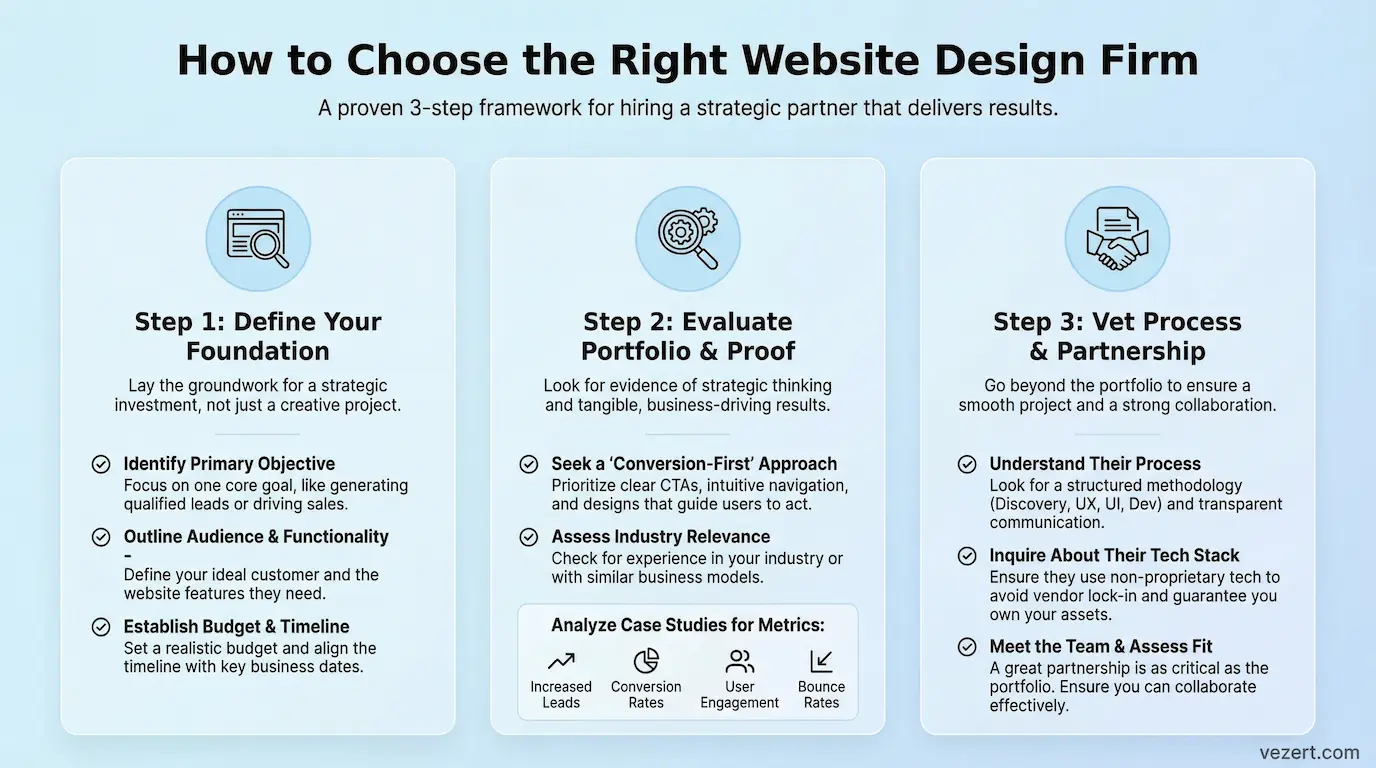
Identify Your Primary Website Objective
A website that tries to be everything to everyone will fail to achieve anything meaningful. Your first step is to define a single, primary objective that will drive the entire design and development strategy. This is the core of conversion-first design. From there, you can identify secondary goals that support your main objective.
- Primary Goal Example: Generate qualified leads by driving demo bookings.
- Secondary Goals: Increase newsletter signups and build brand authority through a resource hub.
Outline Your Target Audience and Key Functionality
Who are you trying to reach, and what do they need to accomplish? Answering this question dictates the entire user experience. Outline your ideal customer's pain points and how your website will solve them. This directly informs the key functionality your site must have, whether it's a smooth e-commerce checkout, a secure client portal, or an integration with your CRM. For example, a landing page requires a different approach than a corporate website. This strategic brief defines the technical expertise required, covering the core disciplines of what is web design, from UI to back-end development.
Establish a Realistic Budget for Your Website Design Firm
Optimal digital solutions are an investment in your company's growth. Before approaching an agency, establish a realistic budget that reflects the value of this asset. While costs vary based on complexity, a professional website is a significant commitment. A reputable website design firm will provide transparent pricing based on a detailed project scope. Likewise, define your timeline by tying it to key business dates, such as an upcoming product launch or a major marketing campaign, to ensure your new site is ready to perform when you need it most.
Step 2: How to Evaluate a Website Design Firm's Portfolio
A portfolio is more than a gallery of attractive websites; it's a direct reflection of a firm's strategic thinking and problem-solving capabilities. When you evaluate a potential partner, look past the surface-level aesthetics and search for evidence of a clear, results-driven process. The right website design firm doesn't just build pages, they architect digital experiences designed to achieve specific business goals.
Look for a 'Conversion-First' Design Approach
An elite firm designs with intent. Their work should be a masterclass in guiding users toward a desired action, whether it's making a purchase, filling out a form, or requesting a quote. Scrutinize their past projects for clear calls-to-action (CTAs), intuitive navigation, and uncluttered layouts that make the user journey smooth. A results-oriented agency will always speak the language of conversions, leads, and ROI, not just colors and fonts.
Assess Industry Relevance and Versatility
Has the firm worked in your industry or with a similar business model? While not a strict requirement, relevant experience can significantly shorten the learning curve. However, don't discount a versatile firm. A portfolio showing a wide range of styles and industries demonstrates an ability to adapt and apply core design principles to any brand. The decision of hiring a web developer is about accessing professional expertise, so look for a team that can either speak your industry's language or prove they can learn it quickly.
Analyze Case Studies for Proof of Results
Case studies are where a great website design firm separates itself from the competition. Vague testimonials aren't enough; you need to see concrete proof. A powerful case study details the client's initial problem, the firm's strategic process, and the measurable outcome. Look for hard metrics that matter to your bottom line:
- Increased lead generation or sales
- Higher user engagement rates
- Improved conversion rates
- Reduced bounce rates
This data is the ultimate proof that the firm delivers real business value, not just a digital facelift. See how our designs transform visitors into customers.
Finding a Website Design Firm, The Numbers
73% of marketing leaders regret their first web design firm choice (Forrester 2024). Average B2B agency RFP cycle: 8–12 weeks (G2 2024 Agency Buyer Survey).
From the trenches
"The agencies that consistently disappoint clients all share one habit: they pitch their portfolio first and ask about your goals second. Reverse the order on the first call. The firms that ask 'what does success look like in 12 months?' before showing you their work are the ones worth shortlisting." - Vezert engagement lead
Conversion-First Design Matters
The right website design firm prioritizes conversion rate optimization (CRO) from the first wireframe. Ask any potential partner how they measure success, the answer should always include metrics like lead generation, bounce rate reduction, and revenue growth, not just visual appeal.
Step 3: How to Vet Your Website Design Firm's Process and People
A stunning portfolio gets a firm on your shortlist, but their internal operations determine the project's ultimate success. A high-converting website is the direct result of a great partnership, which requires a well-defined methodology and a collaborative team. When vetting a potential website design firm, look beyond the final product and focus on the three pillars that support it: their process, their technology, and their people.
Understand Their Design and Development Process
A structured methodology is the blueprint for an efficient, on-time, and on-budget project. Ask for a clear breakdown of their process, which should include distinct phases like Discovery, UX Strategy, UI Design, and Development. Inquire about the project management and communication tools they use to maintain transparency. A professional firm will have a system (e.g., Asana, Slack, Jira) to keep you informed. Forward-thinking agencies that use AI-powered development can often deliver superior results faster.
Inquire About Their Technology Stack
The technology used to build your website directly impacts its performance, scalability, and your future freedom. Clarify which platforms they specialize in, whether it's a flexible solution like Webflow, a powerful Headless CMS, or a custom build. As experts on how to find a web development agency often advise, it is important to ensure they use non-proprietary technology. This guarantees you own your digital assets completely, preventing you from being 'locked in' to a single provider for future updates.
Meet the Team and Assess Cultural Fit
You're not just buying a service; you're entering a strategic partnership. The team you work with is as critical as their portfolio. Ask key questions to gauge the relationship:
- Will you have a dedicated project manager or a single point of contact?
- Do they listen intently to understand your business goals, or do they just push their own ideas?
- Does their communication style align with yours?
The best website design firm acts as a true extension of your team, providing proactive guidance and making you feel like a valued partner, not just another client. Whether you need a custom UX/UI design or a full-scale web portal, the right firm adapts its process to your goals.
Avoid Vendor Lock-In
Always confirm you will own the source code, design files, and all digital assets upon project completion. A trustworthy partner uses open, non-proprietary technology stacks. If a firm insists on hosting your site exclusively on their servers or using proprietary tools, consider this a significant red flag.
Step 4: What Are the Red Flags and Green Flags in a Web Design Firm?
Choosing a partner for your digital presence is a critical business decision. The right website design firm acts as a growth catalyst, while the wrong one can lead to costly delays and missed opportunities. Knowing what to look for separates the strategic partners from the tactical vendors. While you should trust your gut, backing it up with these objective checks will ensure you make a confident, results-driven choice.
Green Flags: Signs of a Great Partner
A professional firm demonstrates its value long before a contract is signed. Look for these positive indicators that signal a focus on performance and a high-quality partnership.
- They ask strategic questions about your business goals. A top-tier firm wants to understand your revenue targets, customer lifetime value, and key performance indicators. Their focus is on building a high-converting asset that drives business growth, not just a visually appealing design.
- They have a transparent process and pricing structure. You should receive a clear, step-by-step outline of their methodology, from discovery and UX/UI design to development and launch. Pricing should be detailed and justified, with no hidden fees.
- They have strong testimonials and long-term client relationships. Happy clients who stick around for years are the ultimate proof of performance. Look for case studies with measurable results, like increased conversion rates or qualified lead generation.
- They challenge your ideas for a better outcome. A true partner isn't afraid to push back respectfully. If they suggest an alternative approach based on data or UX best practices, it shows they are invested in your success, not just completing a task list.
Red Flags: Warning Signs to Heed
Conversely, certain behaviors can signal inexperience, a poor process, or a lack of commitment to your goals. Be cautious if you encounter any of these warning signs.
- They offer a very low price without understanding the scope. A rock-bottom quote before a detailed discovery call is a major red flag. This often leads to surprise up-charges, rushed work, or a final product that fails to meet objectives.
- They can't explain their process clearly. If an agency is vague about their workflow or uses confusing jargon without explanation, it likely points to a disorganized, inefficient system.
- Their portfolio consists only of generic templates. Look for custom solutions that solve specific business problems. A portfolio full of slightly modified themes suggests they are assemblers, not strategic designers and developers.
- Poor communication during the sales process. Slow response times or evasive answers are a preview of your future working relationship. A professional website design firm values your time from the very first interaction.
The right partner will feel like a strategic extension of your team, inspiring confidence with their clarity, expertise, and focus on your business goals. A great firm doesn't just build websites; they build growth engines, a principle that drives every conversion-first project we undertake. For a deeper look at what makes a website truly effective, explore our guide on corporate website development.
Budget Insight
The cheapest option rarely delivers the highest ROI. Companies that invest in a strategic website design firm typically see 2-5x more leads within the first year compared to those using template-based solutions. Think of your website as a long-term revenue asset, not a one-time expense. Review our pricing page for transparent cost breakdowns.
Step 5: How to Compare Website Design Firm Proposals
You've completed the discovery calls and narrowed your list to the top contenders. Now, the critical task is to dissect their proposals not just by price, but by the long-term value they promise. The cheapest bid often signals cut corners or a lack of strategic depth, which costs more in the long run through missed conversions and future redesigns. Your goal is to identify a true growth partner, not just a service provider.
How to Read a Web Design Proposal
A professional proposal is more than a price tag; it's a blueprint for success. It should demonstrate that the website design firm truly understands your objectives. Look for these key components:
- A detailed Scope of Work (SOW) that clearly lists all deliverables, from wireframes and mockups to final site launch.
- A transparent project roadmap with defined phases, realistic timelines, and a clear payment schedule.
- A summary that directly connects their proposed solution to your specific business goals, such as increasing leads or improving user engagement.
Comparing 'Apples to Apples'
To make an informed decision, you must look beyond the final number. Create a simple spreadsheet to compare what's included in each offer. Does one proposal include more in-depth UX research, a dedicated project manager, or more rounds of revisions? Does another offer post-launch support or conversion optimization services? Factor in the confidence you have in their team and their process, this intangible asset is often the best indicator of a successful project.
Checking References and Signing the Contract
Before you commit, perform your final due diligence. Ask to speak with one or two recent clients to validate the firm's process and results. Once you're confident, carefully review the contract. Pay close attention to clauses on intellectual property ownership, deliverables, and the process for handling scope changes. A clear, fair contract is the foundation of a great partnership.
Choosing the right website design firm is an investment in your company's future growth. By focusing on value, transparency, and partnership potential, you set the stage for a digital asset that delivers measurable results. Ready for a transparent proposal from a results-driven firm?

From Search to Success: Choosing Your Growth Partner
Choosing the right partner for your digital presence is a critical business decision. The journey begins not with a simple search, but with a clear definition of your goals. It requires looking beyond flashy designs to rigorously evaluate a firm's portfolio, process, and the people behind the work. This strategic approach ensures you select a website design firm that acts as a true catalyst for your business growth, not just a vendor.
At Vezert, we embody this partnership approach. We believe a website must be your most powerful engine for growth. That's why we combine our Conversion-First Design philosophy with a completely transparent process and pricing. Once you have selected a firm, you will want to be a well-prepared client, our guide on what to expect when working with web designers walks through the collaboration process from discovery to launch so you get the most from the partnership. If your project requires an ongoing marketing partner alongside the design firm, understanding what a digital marketing agency does and how it differs from a web studio helps clarify which partner owns which deliverables. Explore our full range of web design and development services to see how we deliver results. Our proprietary AI-Powered Web Development allows us to deliver your high-performing website with unparalleled speed and precision, turning your vision into a measurable reality.
You now have the framework to make a confident decision. The right partnership can transform your business, and we're ready to build that future with you. Ready to build a website that drives growth? Start Your Project.
On This Page
- Step 1: How to Define Your Business Goals Before You Search
- Step 2: How to Evaluate a Website Design Firm's Portfolio
- Step 3: How to Vet Your Website Design Firm's Process and People
- Step 4: What Are the Red Flags and Green Flags in a Web Design Firm?
- Step 5: How to Compare Website Design Firm Proposals
- From Search to Success: Choosing Your Growth Partner