


On This Page
- Why Landing Page Optimization Pays Before Design Does
- 2026 Industry Conversion Benchmarks
- What UX Principles Actually Change the Number
- How to Write a CTA People Click
- What Structure Converts
- Where Trust Signals Belong on the Page
- How Speed and Search Feed Each Other
- How to Test Without Fooling Yourself
- When to Expect the Numbers to Move
- What to Do First
Landing page conversion is driven by the exact alignment of user intent with a clear value proposition, minimizing friction through fast load times, strict visual hierarchy, and removing all secondary choices that distract from a single primary call to action.
Landing page conversion optimization is the systematic process of improving every element of a landing page to maximize the percentage of visitors who take a desired action. Whether you need more leads, sign-ups, or sales, the right combination of UX design, page structure, CTA placement, and continuous testing determines whether your landing page generates results or wastes traffic.
For businesses investing in paid advertising, email campaigns, or organic search, a poorly optimized landing page means money left on the table. Studies consistently show that even small improvements in conversion rate optimization (CRO) can compound into significant revenue gains over time. This article covers the proven strategies that separate high-converting landing page designs from underperforming ones, and explains how a structured approach to landing page conversion optimization turns pages into measurable business assets.
Why Landing Page Optimization Pays Before Design Does
A landing page is not just a marketing asset; it is a direct revenue driver. Landing page conversion optimization connects user intent with a specific business action, whether that action is lead generation, product sign-ups, or purchase completion. From a website development perspective, it is one of the most accountable elements of a company's digital presence.
The Cost of Unoptimized Landing Pages
The difference between a 2% and a 5% conversion rate on 10,000 monthly visitors is 300 additional conversions per month. For businesses running paid campaigns, an unoptimized landing page directly increases cost per acquisition (CPA) and reduces return on ad spend (ROAS). Every dollar spent driving traffic to a low-converting page is partially wasted.
From Visual Design to Conversion-Focused Web Design
The shift from "design for appearance" to conversion-focused web design is about focus. Visual-only design prioritizes aesthetics, while landing page conversion optimization grounds every decision in clarity, hierarchy, and intent. Every block, headline, and interaction exists to support a single user decision rather than display visual complexity.
A modern web design agency treats landing pages as performance tools. Instead of decorating a page, teams define goals, organize content to minimize friction, and make UX decisions aligned with business metrics. This approach positions a landing page as a testable, improvable asset rather than a static marketing element.
2026 Industry Conversion Benchmarks
According to 2026 data from Unbounce and Baymard Institute, conversion rates vary significantly by sector. Top performers eliminate friction early.
| Industry / Sector | Median Conversion Rate | Top 10% Decile | Primary Mobile Friction Factor |
|---|---|---|---|
| B2B Software / SaaS | 2.8% | 7.8% | Excessive form fields before value delivery |
| Professional & Legal Services | 3.9% | 9.4% | Lack of direct calendar booking / trust proof |
| Commercial Real Estate | 2.4% | 6.2% | Heavy hero assets causing high LCP on mobile |
| B2B Industrial & Manufacturing | 1.9% | 5.1% | Gated spec sheets without instant preview |
| Healthcare & Medical Technology | 2.6% | 6.8% | Complex regulatory disclosures and compliance gates |
CRO Impact on Revenue
Conversion rate optimization (CRO) directly impacts the bottom line. A landing page converting at 4% instead of 2% effectively doubles the value of every marketing dollar spent on traffic. Landing page conversion optimization is not a one-time project but an ongoing discipline that compounds results over time.
What UX Principles Actually Change the Number
Strong UX for landing pages focuses on directing users toward one outcome. When UX decisions are made intentionally and aligned with user intent, conversion optimization becomes structured and predictable rather than a matter of taste. The principles that move the number are unglamorous: one visual hierarchy, one reading path, one action per screen, and no competing element that asks the visitor to decide something else first.
Clarity Over Creativity
Clarity eliminates hesitation and reduces cognitive load. High-performing landing pages are built around:
- A clear message that communicates the value proposition within seconds.
- One primary goal rather than a range of competing objectives.
- Minimal visual noise through concise copy and focused imagery.
Creative elements can enhance the message, but they should never overshadow it. As Nielsen Norman Group's guidelines on visual hierarchy explain, high-priority tasks should be emphasized with clear visual prominence, giving users a definitive starting point. When users instantly understand what is offered and why it matters, conversion rates improve naturally.
Logical User Flow from Entry to Action
Users do not interact with landing pages randomly. They scan, follow visual cues, and seek confirmation before committing to an action. Effective UX for conversion-focused web design considers:
- How users progress from headline to supporting information.
- How visual hierarchy and spacing direct attention through the page.
- Why section order matters more than decorative design choices.
A logical flow keeps users moving toward the conversion point. Even compelling visuals become ineffective when the page structure disrupts decision-making.
Mobile UX as a Conversion Baseline
Mobile-first design is no longer a competitive advantage for high-converting landing page design; it is a baseline requirement. According to Baymard Institute's mobile UX research, mobile users are particularly sensitive to page layout and interaction friction. Mobile UX directly impacts conversion when:
- Key messages and CTAs appear early and prominently.
- Interactions are easy to complete with one hand.
- Common issues like dense text, small tap targets, and unclear spacing are eliminated.
Landing pages that perform poorly on mobile lose users before the value proposition is fully communicated. Across all devices and entry points, UX consistency builds trust and reduces uncertainty, making CRO efforts more predictable.
Mobile Conversion Optimization Checklist
To eliminate the top four mobile friction points, ensure your pages meet these requirements:
- Cumulative Layout Shift (CLS < 0.05) from late-loading fonts or banners.
- Touch target spacing (minimum 48x48px per WCAG and Google standards).
- Hero section load time (sub-1.2s Largest Contentful Paint).
- Progressive disclosure forms (multi-step rather than an overwhelming 10-field single form).
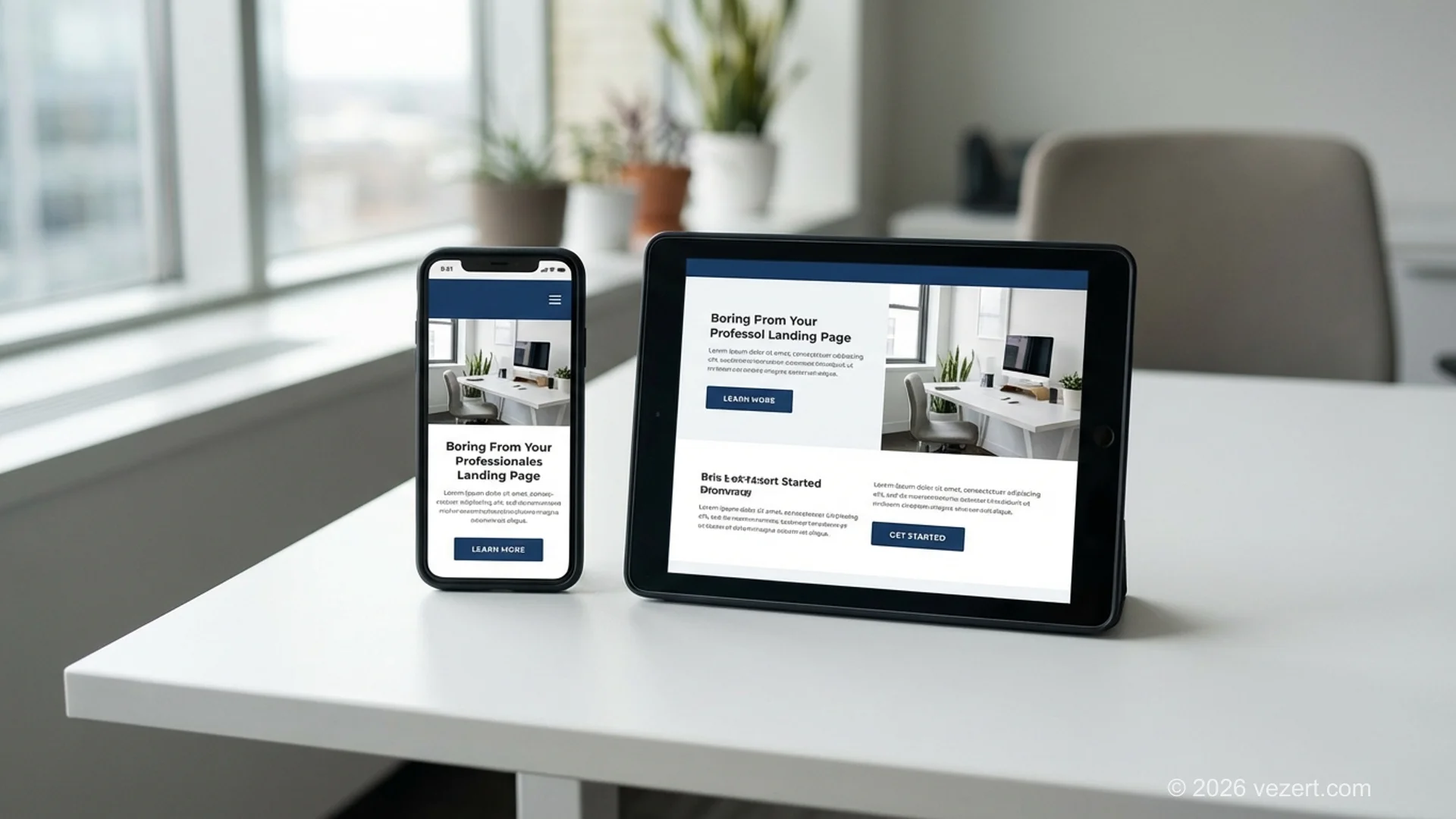
UX Clarity Drives Landing Page Conversion
Conversion optimization becomes structured and predictable when UX decisions are made intentionally. Clarity over creativity, logical user flow, and mobile-first design are not separate considerations. They are the foundation of a landing page that reliably converts across all devices and entry points.
How to Write a CTA People Click
In conversion-focused web design, a CTA is a decision point, not a visual element. A CTA represents the moment when a user decides whether the page has provided enough clarity, value, and confidence to proceed. If that decision is uncertain, no button design can compensate.
What Makes a CTA Convert
A strong CTA is shaped by more than appearance. Its conversion impact depends on:
- Action-oriented text that clearly states what happens next (e.g., "Get Your Free Audit" instead of "Submit").
- Strategic placement aligned with the user's reading flow and decision readiness.
- Supporting context providing the right information and reassurance near the action.
When these elements work together, the CTA feels like a natural next step rather than a forced interaction. This alignment is central to effective conversion-focused web design.
Avoiding CTA Overload
Too many CTAs can undermine conversion rates. Multiple competing actions divide attention, introduce hesitation, and dilute clarity. High-converting landing page designs typically focus on a single primary action supported by consistent messaging throughout the page. This approach keeps users oriented and increases the probability of conversion.
For pages that require secondary actions, consider visual hierarchy: make the primary CTA prominent with contrasting color and size, while secondary options remain visually subdued. Research from Smashing Magazine on CTA design confirms that clarity of purpose consistently outperforms visual complexity in driving clicks.
What Structure Converts
Applying a proven landing page structure limits uncertainty and drives users toward action. Structure determines how information is processed, which questions are answered first, and when users feel ready to convert. Without effective structure, even excellent copy and design become ineffective.
Information Hierarchy and Content Order
A high-converting landing page follows a logical structure that mirrors decision-making:
- Hero section with a headline stating the core value proposition.
- Benefits section explaining what the user gains.
- Social proof building credibility through testimonials, logos, or case studies.
- CTA section inviting the user to take the next step.
This order works because it reflects how users make decisions. A clear hierarchy answers questions before they arise, eliminating doubt and preventing users from leaving to seek confirmation elsewhere.
Visual Contrast and Focus Points
Visual contrast guides attention and reinforces structure. Used correctly, it helps:
- Emphasize key messages and CTAs with contrasting colors.
- Separate primary content from supporting details using whitespace.
- Lead the eye through the page in a controlled, intentional manner.
Distractions from conversion often include excessive visual noise, competing color schemes, or multiple focal points. When contrast is intentional and limited, it creates clarity and keeps users focused on the action that matters.
A well-structured landing page minimizes friction by presenting information in the right order at the right time. This clarity facilitates decision-making and exemplifies conversion-focused web design, making structure one of the most influential factors in CRO.
Where Trust Signals Belong on the Page
Effective CRO relies heavily on trust. Users evaluate whether a page feels predictable and transparent before taking action, and they do it in seconds, before reading any argument. When trust is absent, even a well-constructed landing page struggles to convert. Placement matters as much as content: a signal next to the button does work, the same signal in the footer arrives after the decision has already been made.
Types of Trust Signals
Trust is reinforced through several practical elements that a professional web design agency integrates strategically:
- Social proof demonstrating that others have already taken the same step, such as customer testimonials, client logos, or case studies from the portfolio.
- Clear explanations eliminating uncertainty about what happens after clicking the CTA.
- Predictable interactions that behave exactly as users expect.
- Security indicators such as SSL badges, privacy statements, and payment guarantees.
How Trust Reduces Friction in Conversion Optimization
These trust elements work hardest when incorporated naturally into the page. Overstated claims or aggressive persuasion tend to generate doubt rather than confidence. When users understand the offer, see consistent signals, and feel in control of the interaction, friction decreases significantly. This level of clarity supports stronger decision-making and allows conversions to happen without pressure.
According to Baymard Institute's checkout usability research, perceived security is one of the top factors influencing whether users complete a conversion. Applying these principles extends beyond e-commerce to any landing page where users submit personal information.

Turn Your Landing Page Into a Conversion Asset
Our team builds conversion-focused landing pages grounded in UX clarity, proven structure, and data-driven testing. See how a structured CRO approach delivers measurable results.
Discuss Your ProjectHow Speed and Search Feed Each Other
Effective conversion optimization integrates SEO and performance from the start. Even when a landing page is built for a specific campaign, search visibility and load speed directly affect user experience from the first second of the visit. The two reinforce each other: a faster page keeps more of the visitors search sends, and a page that keeps visitors sends the engagement signals that keep it visible.
SEO for Landing Page Discovery
SEO aligns landing pages with user intent by matching structure, headings, and content with how people search. Proper keyword placement, semantic HTML, and structured data help landing pages rank for relevant queries, reducing dependency on paid traffic over time. This organic visibility turns a single campaign page into a long-term asset within your broader website development strategy.
Performance as a Conversion Factor
Slow load times directly harm conversion rates. According to web.dev's research on Core Web Vitals business impact, faster-loading pages consistently lead to increased engagement and conversions. Each additional second of load time can reduce conversions by up to 7%, with mobile users being especially sensitive to delays.
Core Web Vitals metrics that matter most for conversion performance:
- LCP (Largest Contentful Paint): How quickly the main content loads. Target under 2.5 seconds.
- FID (First Input Delay): How responsive the page feels. Target under 100 milliseconds.
- CLS (Cumulative Layout Shift): How stable the layout is during loading. Target under 0.1.
Optimization is not an afterthought added post-design. Layout decisions, content hierarchy, and visual elements all impact performance and crawlability. When SEO and speed are considered from the beginning, landing pages perform consistently and support long-term website optimization goals.
Performance Kills Conversions Silently
A landing page that loads in 5 seconds instead of 2 can lose up to 20% of potential conversions. CRO must include performance optimization as a core discipline, not an optional enhancement. Monitor Core Web Vitals (LCP, FID, CLS) regularly and treat performance regressions as conversion emergencies.
How to Test Without Fooling Yourself
Successful conversion optimization requires constant validation through testing. Even well-structured landing pages are based on assumptions until tested with real users, and the assumptions that feel most obvious are the ones worth testing first. Without testing, design decisions are driven by opinion and seniority rather than evidence, and the team ends up rebuilding the same page twice for reasons nobody can reconstruct.
Why Assumptions Rarely Survive Testing
Design without testing is unpredictable because:
- User behavior frequently diverges from internal expectations and stakeholder preferences.
- Small details like button color, headline phrasing, or image choice can influence decisions more than major layout changes.
- What works for one audience segment may underperform with another.
A/B testing replaces guesswork with data and enables teams to iterate based on real performance metrics rather than intuition.
What to Test First on a Landing Page
Effective CRO prioritizes testing elements with the highest potential impact on conversion:
- Headlines that communicate value proposition and user intent clearly.
- CTA copy and placement to improve clarity and commitment signals.
- Content order to validate whether the information sequence supports decision-making.
- Form design including field count, labels, and layout.
- Social proof placement to find where trust signals have the strongest impact.
Iterative testing improves the page incrementally, transforming conversion from a guess into a process. User expectations, traffic sources, and business goals evolve continuously. Regular A/B testing ensures your landing page stays aligned with these shifts, maintaining strong performance as part of a broader website optimization strategy.
When to Expect the Numbers to Move
The CRO process is not an overnight fix. Understanding the typical timeline helps set realistic expectations and plan resources effectively, and it prevents the most common failure in optimization work: cancelling a test before it has collected enough traffic to say anything. The phases below reflect what a first optimization cycle looks like when traffic volume is adequate and the team can ship changes weekly.
Phase 1: Research and Audit (Week 1-2)
The first phase involves analyzing current performance, identifying conversion bottlenecks, and benchmarking against industry standards. This includes heatmap analysis, user session recordings, and funnel analytics to understand where visitors drop off.
Phase 2: Strategy and Design (Week 2-4)
Based on research findings, a conversion-focused web design strategy is developed. This covers wireframing, content hierarchy planning, CTA strategy, and mobile optimization priorities. Working with an experienced UX/UI design team during this phase ensures decisions are grounded in evidence.
Phase 3: Implementation (Week 3-6)
Design and development execute the optimized landing page structure, integrating trust elements, performance optimization, and tracking setup for future A/B testing.
Phase 4: Testing and Iteration (Ongoing)
Once live, the real optimization work begins. A/B tests run continuously, with each test cycle typically requiring 2-4 weeks to reach statistical significance. Most businesses see measurable improvement within 8-12 weeks of structured CRO work, with gains compounding as more elements are validated.
View our portfolio for examples of landing page projects where this systematic approach delivered measurable conversion improvements, or check our pricing to understand investment levels for professional CRO services.
Ready to Optimize Your Landing Page for Conversions?
From UX audit to A/B testing, our team handles every phase of the optimization process. Let us turn your landing page into a predictable revenue driver.
Get a Free ConsultationWhat to Do First
Landing page conversion optimization is a continuous discipline, not a one-time task. Its value is measured by how effectively it supports user decisions, captures intent, and delivers measurable results within the broader marketing system rather than by how modern the page looks. If you are starting today, start with the form and the first screen: they hold the two decisions that cost the most visitors, and both can be changed this week.
Conversions are not design-driven. They emerge from the intersection of structure, UX for landing pages, targeted CTA strategy, trust signals, and continuous testing. Clear hierarchy, focused user paths, and data-informed adjustments reduce friction and enhance decision-making at every stage.
A systematic approach to CRO makes performance predictable. When landing pages are treated as assets that can be continuously improved and optimized, results become more stable and easier to scale. This mindset defines how a professional web design agency approaches CRO, with clarity, consistency, and measurable purpose.
For further reading, explore our corporate website design examples and learn about the differences in corporate website vs landing page. Also explore our landing pages and pricing.
On This Page
- Why Landing Page Optimization Pays Before Design Does
- 2026 Industry Conversion Benchmarks
- What UX Principles Actually Change the Number
- How to Write a CTA People Click
- What Structure Converts
- Where Trust Signals Belong on the Page
- How Speed and Search Feed Each Other
- How to Test Without Fooling Yourself
- When to Expect the Numbers to Move
- What to Do First