
Op deze pagina
- Waarom Zijn SEO en Website Development Met Elkaar Verbonden?
- SEO vs Website Development: Wat Is Het Echte Verschil?
- Hoe Beïnvloedt Websitestructuur SEO?
- Waarom Technische SEO Tijdens De Ontwikkeling Moet Beginnen
- Hoe SEO en Website Development Conversies Ondersteunen
- Wat Gaat Er Mis Als SEO en Development Gescheiden Worden?
- Welke Rol Speelt AI-Gedreven Development In SEO?
- Hoe Een Webdesignbureau SEO en Development Op Één Lijn Brengt
- Samengevat
SEO en website development zijn twee vakgebieden die eigenlijk één keten van beslissingen vormen, geen gescheiden projectfasen. Toch krijgen we dit telefoontje minstens twee keer per maand: een bedrijf heeft net €30.000-€50.000 uitgegeven aan een gloednieuwe website, en nu zegt hun SEO-bureau dat de hele zaak opnieuw moet worden gestructureerd. De URL-hiërarchie is plat, interne links bestaan nauwelijks, en Googlebot stikt in render-blocking JavaScript. Au.
Wat de meeste teams niet doorhebben over SEO en website development: SEO is geen laagje dat je erop schildert nadat de website klaar is. Het zit ingebakken in de architectuur zelf. De manier waarop je pagina's zijn georganiseerd, hoe interne links ze met elkaar verbinden, hoe snel ze laden, dat zijn ontwikkelbeslissingen die direct je zoekplafond bepalen. Sla ze over tijdens de bouw en je betaalt later om ze te repareren. We hebben de facturen gezien. Geen pretje.
Dit artikel laat precies zien waar SEO en website development overlappen, waarom ze scheiden duur is, en hoe een webdesignbureau dat zoeken écht begrijpt sites bouwt die vanaf dag één ranken.
Waarom Zijn SEO en Website Development Met Elkaar Verbonden?
SEO en website development zijn met elkaar verbonden omdat zoekmachines content niet los beoordelen, ze beoordelen de code, de links en de structuur die een ontwikkelaar eromheen heeft gebouwd. Denk eens aan wat Google daadwerkelijk doet als het je site crawlt: het volgt links, leest je HTML en meet hoe snel dingen laden. Elk van die acties raakt iets wat een ontwikkelaar heeft besloten, daarom begint SEO niet bij keywords. Het begint bij code.
Google's SEO Starter Guide maakt dit punt keihard duidelijk: een degelijke SEO-architectuur voor zakelijke websites wordt opgezet tijdens de ontwikkeling, niet erna. Paginahiërarchie, interne links, navigatie, dat zijn geen bijzaken. Het is het skelet dat zoekmachines gebruiken om te begrijpen waar je site over gaat en welke pagina's er het meest toe doen.
Dan is er nog de technische laag. Sitesnelheid, mobiele responsiviteit en schone semantische opmaak bepalen allemaal hoe efficiënt Googlebot je pagina's kan crawlen en beoordelen. We hebben Screaming Frog-audits gedraaid op sites waar 40% van de pagina's niet eens werd geïndexeerd door slordige rendering en gebroken interne links. Geen zoekwoordenonderzoek ter wereld lost dat op.
De overlap tussen SEO en website development zit overal:
- Paginahiërarchie en URL-structuur.
- Interne linklogica en navigatie.
- Core Web Vitals (LCP, CLS, INP)-prestaties.
- Mobile-first responsieve architectuur.
- Semantische HTML die crawlers daadwerkelijk kunnen lezen.
- Een technische basis die niet instort als je content opschaalt.
Een goed gearchitectureerde site laat je pagina's toevoegen, linkwaarde opbouwen en optimaliseren zonder tegen structurele muren aan te lopen. Een slecht gebouwde site betekent dat elk nieuw stuk content tégen de architectuur in vecht in plaats van ervan te profiteren.
SEO vs Website Development: Wat Is Het Echte Verschil?
SEO en website development zijn verschillende vakken met verschillende doelen, maar ze delen een verrassend groot raakvlak, en daar gaat het bij projecten vaak mis. Het SEO-team wil schone URL's en snelle laadtijden. Het devteam wil modulaire componenten en schaalbare code. Als geen van beide kanten met elkaar praat, krijg je een site die technisch werkt maar slecht rankt, of op papier rankt maar slecht converteert.
SEO gaat over content vindbaar en gezaghebbend maken in zoekresultaten. Development gaat over de infrastructuur bouwen waarmee gebruikers interacteren. De overlap, site-architectuur, paginasnelheid, mobiele responsiviteit, gestructureerde data, is waar de echte hefboom zit. Krijg die overlap goed en beide kanten winnen. Negeer hem en je betaalt twee teams om elkaar te ondermijnen. De tabel hieronder splitst de verdeling uit per aspect, zodat je precies ziet waar elk vakgebied een beslissing bezit en waar het die overdraagt aan het andere.
De effectiefste websites behandelen SEO en website development als twee kanten van dezelfde medaille. Wanneer ontwikkelteams de SEO-eisen begrijpen en SEO-specialisten de technische beperkingen kennen, krijg je een website die zowel goed presteert in de zoekresultaten als een sterke gebruikerservaring biedt.
Hoe Beïnvloedt Websitestructuur SEO?
Websitestructuur beïnvloedt SEO omdat het de kaart is die zoekmachines gebruiken om te achterhalen wat je site dekt en welke pagina's de meeste crawl-aandacht en ranking-gewicht verdienen. Als Google in de eerste paar crawls niet doorheeft waar je site over gaat, heb je een structuurprobleem. We hebben honderden zakelijke websites geaudit en het patroon is altijd hetzelfde: ongeordende pagina's, verweesde content en navigatie die zowel gebruikers als bots in de war brengt.
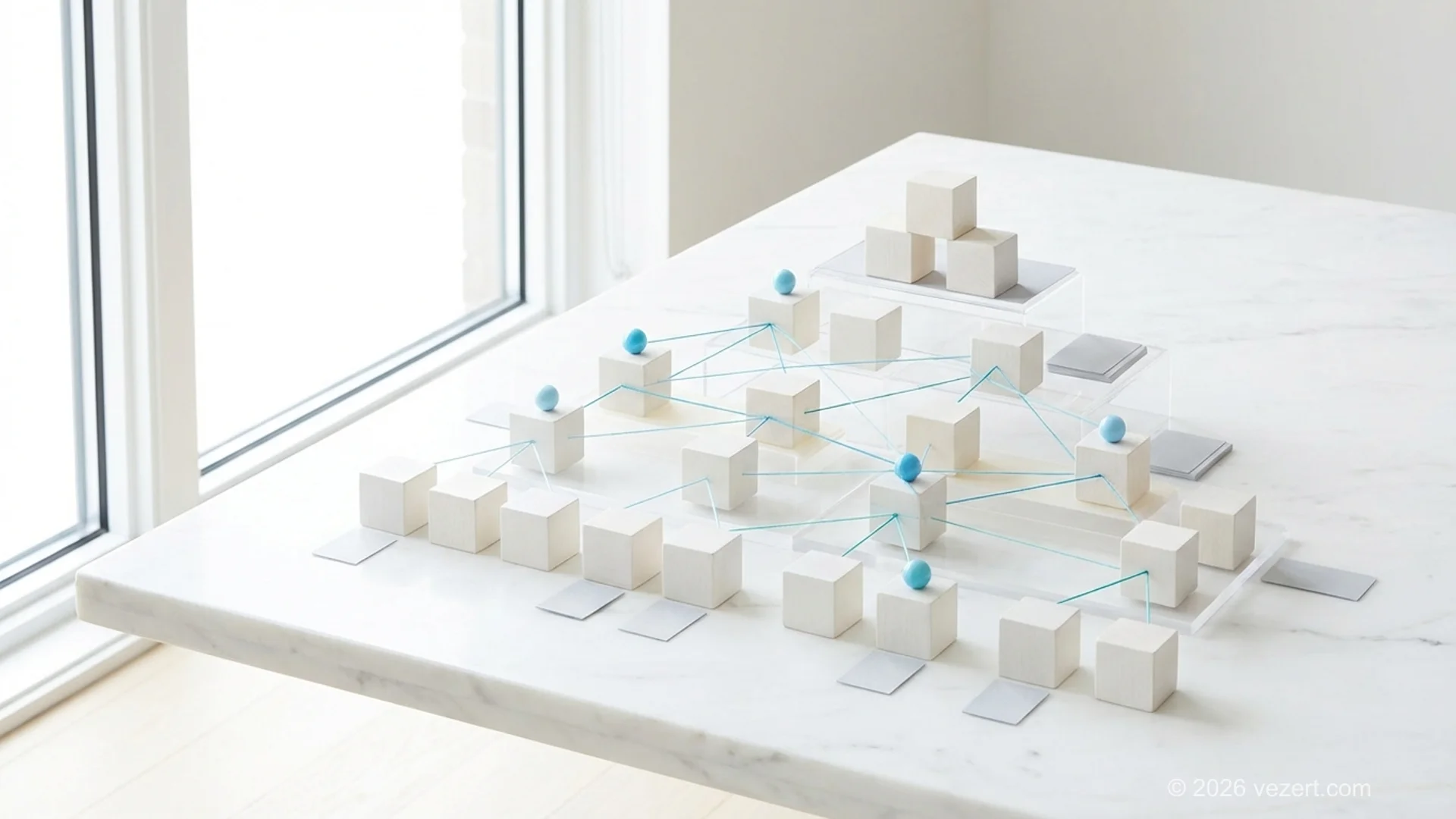
Een SEO-vriendelijke websitestructuur doet twee dingen tegelijk. Voor zoekmachines maakt hij een heldere kaart van wat er bestaat en hoe alles met elkaar verbonden is. Voor gebruikers bouwt hij een natuurlijke route door je content. Als die twee samenvallen, gaat bruikbaarheid omhoog, verbeteren engagement-metrics, en belonen zoekmachines je daarvoor. Vallen ze niet samen, dan eindig je met geweldige content die niemand vindt.
Logische Paginahiërarchie
Hiërarchie draait om prioriteiten zichtbaar maken. Je belangrijkste pagina's, diensten, productcategorieën, belangrijke landingspagina's, moeten binnen twee klikken vanaf de homepage liggen. Ondersteunende content groepeert daaronder in heldere ouder-kindrelaties.
Wat goede SEO-architectuur voor zakelijke websites er in de praktijk uitziet:
- Topsecties die aansluiten op je kernaanbod.
- Subpagina's logisch gegroepeerd onder elke sectie (niet in een platte bak gedumpt).
- Heldere ouder-kind-URL-patronen zoals
/web-portals/in plaats van/page-47/. - Geen kritieke pagina dieper dan drie klikken weggestopt.
We draaien crawl-depth-rapporten in Screaming Frog op elk project. Als een pagina die omzet genereert op diepte 4+ ligt, is er iets misgegaan tijdens de ontwikkeling.
Interne Links en Navigatie
De documentatie van Google Search Central over linkarchitectuur maakt dit duidelijk: interne links zijn hoe crawlers je pagina's ontdekken en prioriteren. Maar wat de meeste ontwikkelaars missen: interne links gaan niet alleen over navigatiemenu's. Het gaat om contextuele links in lopende tekst, broodkruimels, gerelateerde-content-blokken en footerlinks die als systeem samenwerken, een punt dat onze gids over hoe website-architectuur zoekzichtbaarheid beïnvloedt verder uitdiept.
Een degelijke SEO-vriendelijke websitestructuur bevat:
- Hoofdnavigatie die je contentcategorieën weerspiegelt.
- Contextuele links die natuurlijk in de paginatekst staan.
- Broodkruimelpaden die de hiërarchie versterken.
- Consistente linkpatronen over de hele site.
Goed gedaan verdelen interne links de autoriteit over je pagina's en wordt het triviaal om nieuwe content in de bestaande structuur in te passen. Slecht gedaan eindig je met een site waar de helft van de pagina's nul interne links naar zich toe heeft, en Google behandelt ze ernaar.
SEO en website development delen dezelfde structurele basis. Paginahiërarchie, interne links en navigatie worden tijdens de ontwikkeling vastgelegd en bepalen direct hoe zoekmachines pagina's ontdekken, crawlen en ranken. Wanneer deze elementen vanaf de start zijn ingepland, leveren SEO-inspanningen sterkere en consistentere resultaten op.
Waarom Technische SEO Tijdens De Ontwikkeling Moet Beginnen
Technische SEO moet tijdens de ontwikkeling beginnen omdat de reparaties exponentieel duurder worden zodra een site live en geïndexeerd is. Elk technisch SEO-probleem dat we in audits zien, herleidt zich tot een beslissing die iemand wel of niet heeft genomen tijdens de ontwikkeling. Crawlbudget verspild aan paginatie-rommelpagina's? Een architectuurkeuze. Largest Contentful Paint op 6 seconden? Een keuze in de afbeeldingenpijplijn. Dat soort dingen is keihard te repareren na launch.
Technische SEO is infrastructuur, geen content. Het bepaalt of zoekmachines je pagina's efficiënt kunnen bereiken, correct kunnen interpreteren en aan gebruikers kunnen serveren. Volgens het Core Web Vitals-onderzoek van web.dev koppelt Google deze prestatiemetrics nu direct aan ranking-signalen, dus technische kwaliteit is geen optie meer. Het is een voorwaarde om uberhaupt mee te kunnen doen.
Sitesnelheid en Prestaties
We hebben onlangs een 200-pagina-bedrijfssite geaudit die op WordPress draaide met 47 actieve plugins. Lighthouse-score: 28. De homepage deed er 8,3 seconden over om interactief te worden op mobiel, en het team kon zich niet verklaren waarom het organische verkeer bleef teruglopen.
Snelheid is geen nice-to-have. Het is basiseis. Google's eigen onderzoek toont aan dat wanneer de laadtijd van 1 naar 3 seconden gaat, de kans dat mobiele bezoekers afhaken met 32% stijgt; ga naar 5 seconden en die afhaakkans klimt naar 90%. De oplossingen zijn bijna altijd dezelfde:
- Lever afbeeldingen in WebP/AVIF met juiste afmetingen (geen 4000px-originelen die in CSS verkleind worden).
- Verwijder render-blocking JavaScript en CSS boven de vouw.
- Gebruik een CDN. In 2026 is daar geen excuus meer voor.
- Houd je serverresponsetijd (TTFB) onder 200 ms.
Dit zijn ontwikkelbeslissingen. Als je devteam ze niet prioriteert tijdens de bouw, erft je SEO-team een prestatieprobleem dat geen meta-tag-optimalisatie kan repareren.
Mobiele en Responsieve Architectuur
Google gebruikt mobile-first indexing, punt. Als je mobiele ervaring rammelt, lijden je posities daaronder, hoe goed je desktopversie er ook uitziet. Mobiel is inmiddels goed voor ruim boven de 60% van het wereldwijde webverkeer, dus een kapot mobiel layout is geen randprobleem, het raakt de meerderheid van je bezoekers.
Wat we bij elk project controleren:
- Layouts die netjes meeverlopen tussen breakpoints (niet alleen krimpen).
- Tekst die leesbaar is op standaardzoom, geen pinch nodig.
- Tap-targets groot genoeg voor echte menselijke duimen.
- Mobiele laadprestaties die de Core Web Vitals-drempels halen.
Schone Code en Crawlbaarheid
Crawlers zijn geen browsers. Ze wachten niet tot je React-app gehydrateerd is. Als je content opgesloten zit achter client-side rendering zonder server-side fallback, ziet Googlebot hem misschien nooit.
Wat we afdwingen in elke build:
- Semantische HTML, nette
<article>,<nav>,<main>-elementen, geen muur van<div>-tags. - Een strikte koppenhiërarchie (één H1, logische H2-H6-nesting).
- Server-side rendering of statische generatie voor alle indexeerbare pagina's.
- Interne links die echte
<a href>-tags zijn, geen JavaScript-clickhandlers.
Krijg deze basis goed tijdens de ontwikkeling en je SEO-team kan zich richten op strategie in plaats van brandjes blussen in technische schuld.
Hoe SEO en Website Development Conversies Ondersteunen
SEO en website development ondersteunen conversies door samen te werken om bezoekers te trekken die al zoeken naar wat jij verkoopt, en ze daarna een wrijvingsloze route te geven om te handelen. Verkeer dat niet converteert is gewoon een ijdelheidscijfer. We hebben gewerkt met klanten die dolblij waren met 50.000 maandelijkse sessies, totdat ze beseften dat slechts 12 mensen hun contactformulier invulden. De disconnect? Hun site rankte op informatieve zoekopdrachten, maar leidde bezoekers naar doodlopende pagina's zonder duidelijke vervolgstap.
Die wrijvingsloze route is conversie-optimalisatie in de praktijk, niet in theorie. SEO-verkeer is verkeer met hoge intentie. Deze gebruikers typten een zoekopdracht, lazen je snippet en kozen ervoor te klikken. Landen ze op een pagina die snel laadt, hun vraag beantwoordt en duidelijk maakt hoe ze prijzen of contact bereiken, dan werkt de conversierekensom in jouw voordeel.
Hoe dit doorwerkt in SEO en development:
- Afstemming op zoekintentie brengt bezoekers binnen die klaar zijn om te handelen.
- Een goed gestructureerde landingspagina geeft ze een zinvolle plek om te landen.
- Snelle, schone paginarendering houdt ze betrokken in plaats van weg te bouncen.
- Een heldere contenthiërarchie leidt ze van bewustwording naar actie.
De kern: als je architectuur zowel ontdekking als conversie ondersteunt, stopt organisch zoekverkeer een verkeerskanaal te zijn en wordt het een omzetkanaal.

Wat Gaat Er Mis Als SEO en Development Gescheiden Worden?
Als SEO en development gescheiden worden, moeten teams uiteindelijk een architectuur ombouwen die al vastlag toen iemand hem voor het eerst tegen zoekvereisten aanhield. We hebben genoeg 'reddingsprojecten' geërfd om er een boek over te schrijven over wat er misgaat als SEO er pas na launch wordt opgeplakt. Het patroon is deprimerend consistent: het designteam bouwt iets moois, de klant is dolblij, de site gaat live, en dan komt de SEO-audit terug met 47 kritieke issues. Klinkt bekend?
SEO Toegevoegd Na Launch
Dit is de duurste fout die we tegenkomen. Een bedrijf lanceert een prachtige website en huurt dan een SEO-specialist in die meteen zegt: 'Je URL's moeten veranderen. Je navigatie moet anders. Je hebt geen interne links.'
Op dat punt is de schade al aangericht:
- URL-patronen liggen vast en aanpassen betekent redirectketens.
- De interne linkstructuur vraagt om een bijna volledige navigatie-redesign.
- De paginahiërarchie is gebouwd rond design-esthetiek, niet crawllogica.
- Iets ervan repareren kost bijna evenveel als de oorspronkelijke bouw.
Een klant kwam bij ons nadat hun vorige bureau crawlbaarheid volledig had genegeerd. We moesten de sitemap helemaal opnieuw opbouwen, zes maanden na launch. Dat is geld en tijd dat niemand zou moeten uitgeven.
Slechte Site-Architectuur
Slechte architectuur is sluw. De site oogt prima voor een mens die hem doorbladert, maar Screaming Frog vertelt een ander verhaal: verweesde pagina's zonder inkomende links, kritieke dienstpagina's vier niveaus diep weggestopt, en een platte URL-structuur die Google geen enkel topical signaal geeft.
Wat slechte architectuur je echt kost:
- Googlebot besteedt crawlbudget aan onbelangrijke pagina's terwijl je geldverdienende pagina's ongeïndexeerd blijven.
- Linkwaarde stapelt zich op je homepage en stroomt nooit naar de pagina's die het nodig hebben.
- Nieuwe contentsecties toevoegen wordt een structurele hoofdpijn in plaats van routine.
Ontbrekende Technische SEO-Fundamenten
We draaien Lighthouse en Ahrefs Site Audit op elk project dat we erven. De meest voorkomende gaten zijn altijd dezelfde:
- Niet-geoptimaliseerde afbeeldingen die de paginagrootte boven de 5 MB jagen.
- Geen mobile-first overweging, desktop-layout in een kleinere viewport gepropt.
- Client-side rendering zonder SSR-fallback, waardoor de helft van de site onzichtbaar is voor crawlers.
- Ontbrekende of gebroken interne links tussen gerelateerde content.
Elk van deze issues herleidt zich tot een ontwikkelbeslissing. Repareer ze tijdens de bouw en ze kosten niets extra. Repareer ze zes maanden later en je staat voor een fors herontwerp, precies daarom vangt een goede website-audit voor of na een herbouw deze problemen terwijl ze nog goedkoop te repareren zijn. Daarom bouwen we SEO in het ontwikkelproces vanaf de eerste sprint.
Stem SEO af op Website Development
Bouw een website met een SEO-vriendelijke architectuur, sterke technische fundamenten en zoekzichtbaarheid op lange termijn als uitgangspunt.
Vraag Deskundig AdviesWelke Rol Speelt AI-Gedreven Development In SEO?
AI-gedreven development versnelt de saaie, datazware delen van SEO-analyse waar mensen traag in zijn, zonder de oordelen te vervangen die daarna komen. Het is geen toverstaf, maar wel oprecht handig. We gebruiken AI-tooling dagelijks, niet om oordeel te vervangen, maar om analyses te versnellen die vroeger uren kostten.
Bijvoorbeeld: de verdeling van interne links over een 500-paginasite in kaart brengen was vroeger een dagtaak. Nu draaien we AI-ondersteunde crawlanalyses die verweesde pagina's, dunne linkclusters en crawl-depth-issues in minuten markeren. De ontwikkelaar beslist nog altijd wat ermee te doen, maar de diagnose is sneller en grondiger.
Waar AI-gedreven development echt helpt bij SEO:
- Crawlanalyse die structurele zwakke plekken vindt over grote sites.
- Geautomatiseerde detectie van gebroken links en redirectketens.
- Prestatiemonitoring die regressies in Core Web Vitals opvangt voordat ze posities kelderen.
- Bulkvalidatie van metadata, dubbele titels, ontbrekende descriptions, te lange meta tags.
- Patroonherkenning in Search Console-data die rangschikkingskansen blootlegt.
De echte waarde zit niet in één tool. Hij zit in de feedbackloop: AI legt de data bloot, het team interpreteert ze, en de ontwikkelaars voeren wijzigingen door met SEO-context al ingebakken. Die cyclus, analyse, beslissing, implementatie, draait veel sneller als de analysestap deels geautomatiseerd is.
Bij Vezert combineren we deze AI-tools met praktische SEO-expertise. Het algoritme vertelt ons wát er gebeurt. Ons team beslist wat het betekent en wat we ermee doen. Die combinatie, machinesnelheid met menselijke strategie, is hoe we SEO en development op één lijn houden naarmate een site groeit.
Hoe Een Webdesignbureau SEO en Development Op Één Lijn Brengt
Een webdesignbureau brengt SEO en development op één lijn door het SEO-gesprek te beginnen voordat er één wireframe is getekend, niet nadat het design is goedgekeurd. Bij ons bureau gaan we met de klant zitten, brengen hun doelzoekwoorden en zoekintentieclusters in kaart, en gebruiken die om de site-architectuur te bepalen, niet andersom.
Zo ziet ons proces eruit als SEO en development parallel lopen:
- Discovery: we auditen het concurrentielandschap in Ahrefs, identificeren keywordclusters en koppelen ze aan een voorgestelde paginahiërarchie voordat UX-design begint.
- Architectuur: URL-structuur, navigatie en interne linkstrategie worden gepland op basis van crawllogica en topische relevantie, niet alleen op wat strak oogt in een mockup.
- Development: elke template wordt gebouwd met semantische HTML, een correcte koppenhiërarchie, server-side rendering en performance budgets ingebakken in de CI-pijplijn.
- Pre-launch: we draaien een volledige Screaming Frog-crawl op de stagingsite, valideren Core Web Vitals in Lighthouse en stress-testen de interne linkgraaf voordat er iets live gaat.
- Post-launch: de architectuur is ontworpen om te schalen, dus blogcontent, nieuwe dienstpagina's of landingspagina's passen erbij zonder herstructurering.
Dit is niet theoretisch. We hebben 50+ sites gebouwd waar SEO vanaf dag één was ingebakken, en het verschil in time-to-rank ten opzichte van sites waar SEO achteraf is ingepast, is dramatisch. We hebben het over weken tegenover maanden voordat je begint te verschijnen op je doelzoekopdrachten.
Het punt is niet dat je per se Vezert moet inhuren. Het punt is dat wie je site bouwt, zoek-architectuur net zo goed moet snappen als React of Figma. Als je bureau niet kan uitleggen hoe ze tijdens de bouw omgaan met crawldiepte, interne linkwaarde en Core Web Vitals, zoek er dan een die het wél kan.
Wanneer SEO als losse stap na launch wordt behandeld, liggen kritieke elementen als paginahiërarchie, URL-structuur en interne links al vast en zijn ze moeilijk te wijzigen. Dat leidt vaak tot dure herstructurering. SEO en website development vanaf het begin samen plannen voorkomt deze beperkingen en bouwt een sterkere technische basis voor zoekzichtbaarheid op lange termijn.
Klaar Om Een SEO-Geoptimaliseerde Website Te Bouwen?
Krijg een website waar SEO en development vanaf dag één samenwerken. Sterke architectuur, snelle prestaties en blijvende zoekzichtbaarheid.
Start Je ProjectSamengevat
SEO vs website development is een vals dilemma: als je ontwikkelaar niet aan SEO denkt en je SEO-specialist niet aan code, ga je er later voor betalen. Elke ranking-factor die ertoe doet, crawlbaarheid, paginasnelheid, mobiele ervaring, interne links, contenthiërarchie, is een ontwikkelbeslissing vermomd als SEO-metric.
De bedrijven die goed ranken en blijven ranken, behandelen deze disciplines als één werkstroom, niet twee. Ze plannen architectuur rond zoekintentie. Ze bouwen prestaties in de CI-pijplijn. Ze ontwerpen interne links als systeem, niet als bijzaak.
Ga je een nieuw websiteproject starten? Zorg dan dat je webdesignbureau je hun SEO-integratieproces kan toelichten voordat de eerste regel code wordt geschreven. Zodra de website live is, zet dezelfde discipline zich voort in onze doorlopende SEO-diensten: content, technische SEO, AI-zoekoptimalisatie en ranking-onderhoud werken samen in plaats van om budget te concurreren. Kunnen ze dat niet, dan teken je in voor een herbouw over twaalf maanden. En als je nu op een site zit die zonder SEO is gebouwd, is het niet te laat, maar hoe langer je wacht, hoe duurder de reparatie.
Stop met SEO als post-launch-checklist behandelen. Bouw het in het fundament.
Op deze pagina
- Waarom Zijn SEO en Website Development Met Elkaar Verbonden?
- SEO vs Website Development: Wat Is Het Echte Verschil?
- Hoe Beïnvloedt Websitestructuur SEO?
- Waarom Technische SEO Tijdens De Ontwikkeling Moet Beginnen
- Hoe SEO en Website Development Conversies Ondersteunen
- Wat Gaat Er Mis Als SEO en Development Gescheiden Worden?
- Welke Rol Speelt AI-Gedreven Development In SEO?
- Hoe Een Webdesignbureau SEO en Development Op Één Lijn Brengt
- Samengevat