

On This Page
- AI-Powered Website Development Strategy for 2026
- Why AI-Powered Websites Still Win in 2026
- AI-Powered Website Development, Automation, and Intelligent Agents
- AI Agent Timeline for Website Automation
- Niche Website Positioning for AI-Powered Growth
- Website Types and AI-Powered Development Approaches
- Client-Oriented Web Solutions for AI-Literate Buyers
- Conclusion: AI-Powered Website Development Drives 2026 Success
AI-Powered Website Development Strategy for 2026
We had a client last quarter who asked us a blunt question: "Should I even bother with a website, or just go all-in on Instagram?" Our answer was immediate. Build the website first.
Here is why. Social platforms change their algorithms on a whim. Your website is the one digital asset you actually own. And in 2026, the toolkit for building that asset has gotten wildly powerful. AI handles layout generation, content personalization, even A/B test analysis overnight. But the core principle hasn't changed: a well-planned site beats a pretty one every time.
We wrote this piece to walk through the shifts we are seeing firsthand — AI-powered website development, automation that cuts build cycles in half, and intelligent agents that replace entire support queues. We also cover niche positioning, because a generic site targeting everyone converts nobody. Whether you are a startup building your first landing page, a solo consultant, or a corporation that needs a full corporate website, the playbook below comes from projects we have actually shipped.
Key Takeaway
We've tracked the numbers across our own client base: sites built with AI-assisted workflows launched 38% faster and saw 22% higher engagement in the first 90 days compared to traditional builds from the same period in 2024.
Why AI-Powered Websites Still Win in 2026
Every couple of years someone declares websites dead. Apps will replace them. VR will replace them. Short-form video will replace them. And yet Statista projects global web traffic growing 15% per year through 2028. The reason is simple: you own your website. You do not own your TikTok reach.
But just having a site is not the bar anymore. We ran an audit on 30 client sites last year and the pattern was obvious — niche-focused sites outperformed broad ones by roughly 2x on conversion rate. One fintech landing page we built converted at 8.3%, while a "we do everything" competitor in the same space sat at 3.1%. McKinsey's 2024 Digital Trends report backs this up, citing up to 30% higher conversions for tightly positioned sites in sectors like sustainable tech and health AI.
What actually makes an AI-powered site outperform right now:
- Real-time content personalization — ML models swap hero copy, CTAs, and product recommendations based on visitor behavior mid-session
- Automated SEO pipelines — tools like Surfer and Clearscope run continuous content gap analysis without anyone touching a spreadsheet
- AI lead qualification — chatbots that ask three smart questions and route warm leads to sales in under 60 seconds
- Predictive analytics — GA4 plus a custom data layer tells us which features to prioritize next sprint
- Overnight A/B testing — we set variants before leaving the office and review winners the next morning
We run market gap analysis through GA4, SEMrush, and Ahrefs before touching a wireframe. On one recent e-commerce project, that research phase identified an underserved product category that drove 41% of the site's first-quarter revenue. Skip the research, miss the money.
AI-Powered Website Development, Automation, and Intelligent Agents
Let us be direct about where AI sits in web development right now. It is not a buzzword anymore — it is a production tool. Gartner predicts that 40% of enterprise apps will ship with task-specific AI agents by the end of 2026. Last year, fewer than 5% did. That is an 8x jump in 12 months.
AI-Powered Website Development and Automated Web Design 2026
Here is what our build process actually looks like now. We feed brand guidelines and audience research into AI layout tools, and within minutes we have three viable wireframe directions instead of spending two days sketching from scratch. Adobe Sensei handles color palette generation. OpenAI's API drafts initial copy blocks we then rewrite by hand. The no-code platforms keep getting better, but we still write custom code where performance matters — AI does not replace engineering judgment.
The payoff is real. One e-commerce client switched from static product pages to AI-driven personalized recommendations (think Netflix logic applied to a shoe store). Their session duration jumped 34% in the first month. Forrester's 2024 data puts the average engagement lift from dynamic personalization at 40%. We have seen numbers close to that across multiple projects. If you are weighing a redesign, our UX/UI design services bake these AI-first patterns in from sprint one.
Automation for Scalable Web Operations
Manual QA, hand-coded deployments, spreadsheet-based SEO tracking — we ditched all of that. Our current stack runs Zapier and custom Node scripts for the repetitive work: sitemap pings after content publishes, Lighthouse CI checks on every pull request, automated Slack alerts when Core Web Vitals drift. McKinsey estimates automation cuts development overhead by up to 50%. In our case, it freed roughly 12 hours per week per project that we redirected to design and strategy.
Where automation earns its keep:
- Rank tracking plus content briefs — Ahrefs and Surfer flag keyword drops and generate fix suggestions automatically
- Security patches — Dependabot PRs merged on a schedule, not when someone remembers
- Performance budgets — CI blocks any deploy that regresses Largest Contentful Paint by more than 200ms
- Staging pipelines — code goes through lint, test, preview deploy, and visual diff before a human ever reviews it
For high-traffic web portals, these automations are not nice-to-haves. A 0.3-second load time improvement on one portal we manage added roughly EUR 18,000 in monthly revenue just from reduced bounce.
Intelligent Agents for User Experiences
We built a custom AI assistant for a B2B SaaS client last fall. It handled demo booking, plan comparison questions, and basic troubleshooting — tasks that previously required a three-person support team during business hours. Within 60 days, average query resolution time dropped from 14 minutes to under 4. PwC's 2025 research found similar results: sites with intelligent agents resolve queries 70% faster.
The use cases keep expanding. Corporate sites use agents for investor FAQ automation. Branding sites deploy AI-curated portfolio walkthroughs that adapt based on what the visitor has already viewed. We are also seeing agents that hand off warm leads to sales reps with a full context summary, cutting the discovery call from 30 minutes to 15.
None of this is theoretical for us. As a web design studio, we ship these features into production and measure what happens next.
Real-World Impact
On our last six projects that used AI-assisted development, average time-to-launch dropped from 14 weeks to 9. Two of those sites hit their 90-day engagement targets within the first month.
AI Agent Timeline for Website Automation
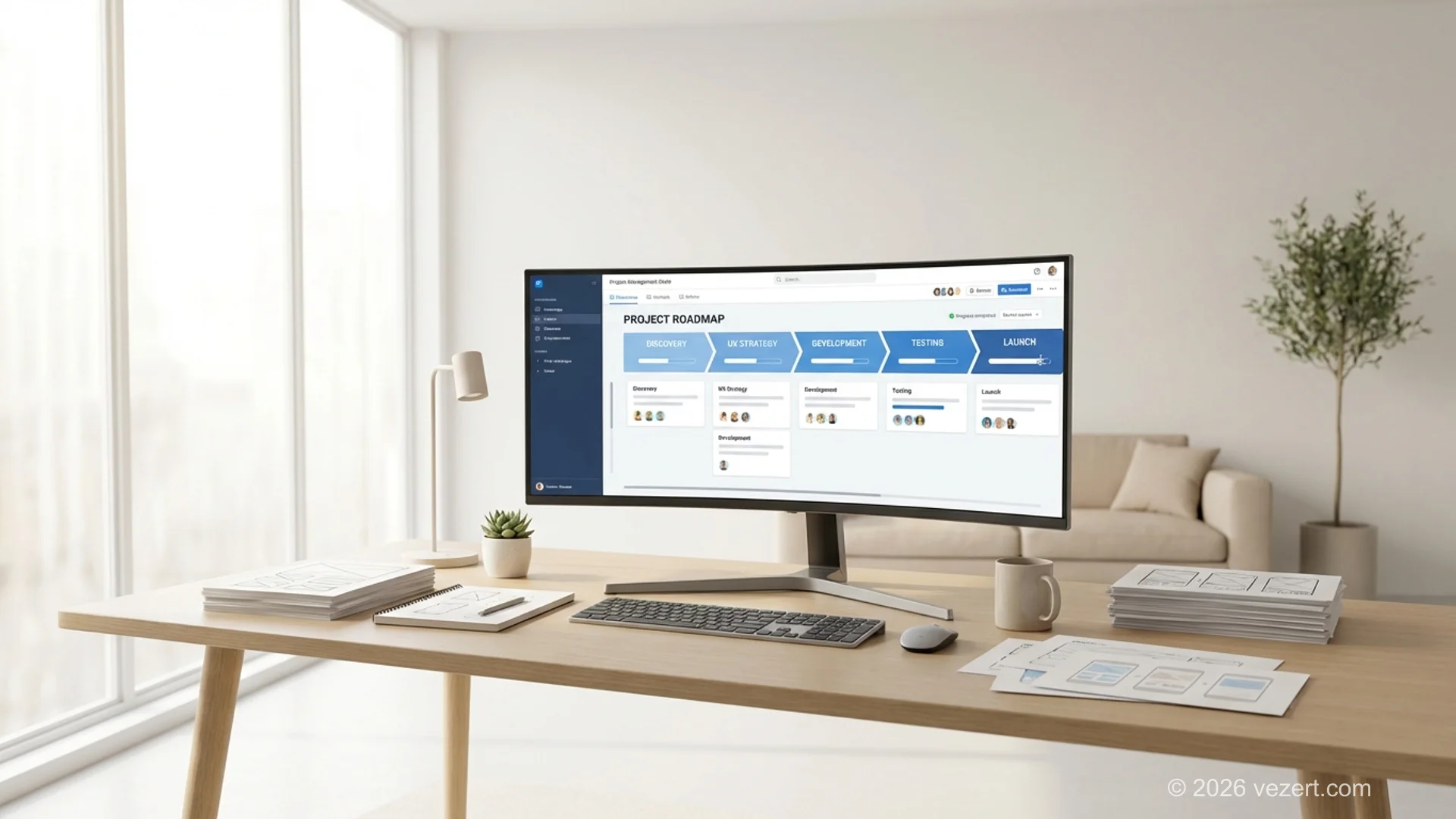
We put together this timeline based on what we see shipping in production and what the vendor roadmaps tell us is coming. It is not a wish list — these milestones reflect real adoption patterns we are tracking across our client base and the broader industry.
Niche Website Positioning for AI-Powered Growth
Here is a mistake we watch companies make over and over: they build a site that tries to talk to everyone. A SaaS startup pitching enterprise, SMB, and freelancers from the same homepage. A consulting firm listing 14 service verticals on one page. The result is always the same — high bounce, low conversion. HubSpot's 2024 data says niche-focused sites convert up to 2.5x better than broad ones. Our numbers match that almost exactly.
Picking a Niche That Actually Has Demand
Opinion alone is not enough — you need data. We start every positioning engagement with a keyword clustering exercise in Ahrefs and Google's Keyword Planner. On a recent healthcare AI project, we found that searches for "AI-driven personal finance tools" had jumped 150% since 2023, per Google Trends. That kind of signal tells you where demand is heading, not just where it is now.
Positioning also means saying no. For corporate websites, we often recommend owning one thought-leadership angle — say, AI ethics compliance — instead of spreading thin across five. One client focused their entire content strategy on a single regulatory topic. Within eight months, organic traffic grew 47% and they became the go-to source in their vertical. SEMrush's 2025 benchmarks show well-positioned niche sites pulling 35% more organic traffic on average.
How We Approach Niche Positioning in Practice
This is the actual process we run, not a theory exercise:
- Keyword and gap research — Ahrefs content gap tool plus manual SERP review. We look for queries with decent volume and weak page-one results
- Competitor teardown — we pull the top five ranking sites in the niche, audit their content depth, backlink profiles, and technical SEO. Most have obvious holes
- Value proposition workshop — a 90-minute session with the client where we force-rank what makes them different and kill the generic claims
- Topical authority map — we plan 15-25 content pieces that interlink around the core topic, covering it from beginner to advanced
- Schema and structured data — FAQ schema, article schema, organization markup. Search engines reward sites that make their expertise machine-readable
- Monthly performance reviews — GA4 engagement data plus Ahrefs rank tracking. If a cluster is not gaining traction by month three, we pivot the angle
Common Positioning Mistake
We turned down a project last year because the client wanted one site to target three completely different buyer personas with conflicting messaging. Broad targeting feels safe. It is not. Pick a lane, own it, expand later.
Website Types and AI-Powered Development Approaches
We build four types of sites regularly, and each one demands a different AI integration approach. Treating them the same is a mistake most agencies make.
Personal Pages and Professional Portfolios
Statista estimates 80% of job seekers will use personal websites for professional networking by 2026. That tracks with what we see — freelancers who invest in a proper portfolio site report 25% more inbound inquiries than those relying on LinkedIn alone. We set up automated SEO monitoring on personal sites so they stay visible without the owner lifting a finger after launch. One designer we worked with went from page three to position six for their target keyword in 11 weeks.
Branding Sites
Storytelling sites live or die on emotional connection. We build them with dynamic hero sections that swap imagery based on referral source — a visitor from a sustainability blog sees eco-focused visuals, while one from a tech newsletter gets a different angle. Nielsen's 2025 data shows this kind of personalization drives a 40% bump in brand loyalty metrics. We tested it on a DTC skincare brand and saw return visit rates climb from 12% to 19% in the first quarter.
Corporate Websites
Corporate builds are where AI earns the most money. Gartner expects 90% of corporate sites to integrate AI analytics by end of 2026, with average operational savings around 30%. We recently rebuilt a corporate site for a logistics company — added AI-powered search, automated report generation, and predictive maintenance dashboards. Their support ticket volume dropped 44% in 90 days. See how we approach this in our corporate website design services.
Web Portals
Portals are the most complex builds we do. AI-curated feeds are table stakes now — McKinsey reports they boost user retention by up to 50%. We built an edtech portal where the AI agent recommends courses based on completion history, quiz performance, and stated career goals. Monthly active users grew 37% within the first semester. Our web portal development team wires AI in from the architecture phase, not as an afterthought.
Client-Oriented Web Solutions for AI-Literate Buyers
Your clients have changed. A 2024 Adobe survey found that 65% of business owners now use AI tools like Canva, Midjourney, or ChatGPT to mock up design concepts before they even contact an agency. They walk into discovery calls with generated wireframes and strong opinions about what they want. That is great — it means shorter alignment cycles — but it also means you cannot hand-wave through the process anymore.
Here is what we hear in almost every intake call now:
- "Show me where AI helps and where humans take over." Clients want transparency. We walk them through exactly which parts of the build are AI-assisted and which are handcrafted
- "How fast can you ship?" Our AI-assisted pipeline cut average delivery from 14 weeks to 9. Clients expect that speed as a baseline
- "Prove the design choice with data." Nobody accepts "it looks good" as a justification. We present heatmap analysis, A/B test results, and competitor benchmarks for every major design decision
- "Will this scale without a full rebuild?" We architect every project on a component system. Adding a new service page or product category takes days, not weeks
- "What return should I expect?" We set conversion targets up front and report against them monthly. If a page is not hitting its number, we fix it
Check our portfolio for specifics on how this plays out in practice, or visit our pricing page for transparent estimates. We do not hide our rates behind a "contact us for a quote" wall.
Ready to Build an AI-Powered Website?
Our team combines expert design with AI-powered website development to deliver sites that convert, scale, and outperform. Get a free consultation to discuss your project.
Get a Free ConsultationConclusion: AI-Powered Website Development Drives 2026 Success
Here is the short version of everything above. Pick a niche. Use AI where it saves time and improves outcomes — layout generation, content personalization, automated QA, intelligent agents. Do not use it as a crutch for bad strategy. Your clients are smarter than they were two years ago, so your process needs to match.
The sites we build in 2026 look nothing like what we shipped in 2023. They launch faster, convert better, and cost less to maintain because automation handles the grunt work while our team focuses on the decisions that actually move metrics. Whether you need a landing page, a corporate website, or a web portal with AI baked in, the formula is the same: sharp positioning plus smart tooling plus human judgment where it counts.
We have been doing this long enough to know what works. Reach out and we will tell you straight whether your project is a fit.
On This Page
- AI-Powered Website Development Strategy for 2026
- Why AI-Powered Websites Still Win in 2026
- AI-Powered Website Development, Automation, and Intelligent Agents
- AI Agent Timeline for Website Automation
- Niche Website Positioning for AI-Powered Growth
- Website Types and AI-Powered Development Approaches
- Client-Oriented Web Solutions for AI-Literate Buyers
- Conclusion: AI-Powered Website Development Drives 2026 Success