


Bu Sayfada
- Web sitesi gelistirme surecleri neden farklidir
- Web sitesi gelistirme sureci: asamalar
- Proje turune gore web sitesi gelistirme suresi
- Web sitesi gelistirme suresini en cok ne etkiler
- Web projelerinde gecikmelerin yaygin nedenleri
- AI destekli gelistirme sureyi nasil kisaltir
- Bir web tasarim ajansi gercekci zaman cizelgesi nasil olusturur
- Web sitesi gelistirme surecini takip etmek icin kontrol listesi
- Web sitesi gelistirme sureci hakkinda son dusunceler
Many businesses expect to receive a new website in a couple of weeks. On the surface, it seems simple enough: design pages, add content, publish. In actual fact, professional website development is a structured process that includes research, UX planning, development, testing, and performance preparation. A good web design agency never skips these stages, because each one has a direct effect on the results.
A realistic website development timeline is based on project scope, complexity, third-party integrations, content readiness, and approval speed. The question is not only how long website development takes, but also what factors affect the timeline and how they impact quality and conversion optimization.
In this article, you will find a detailed breakdown of every website development phase, learn which factors have the biggest impact on project duration, and discover how you can plan your website project without unnecessary delays or risks. Whether you are launching a landing page, a corporate website, or a full web portal, understanding the timeline helps you set realistic expectations from the start.
Why Website Development Timelines Vary
A common question that businesses ask is how long website development takes. The truth is, there is no universal answer. Each project is different in scope, complexity, and business requirements, which has a direct impact on the website development timeline.
The primary reason timelines vary is that websites are not one-size-fits-all products. Even projects that appear similar on the surface might require very different levels of planning, integrations, and testing. A five-page marketing site and a five-page web application with user authentication can have drastically different delivery schedules.
Factors that create variation in the project timeline include:
- Project scope and feature requirements
- Number of pages, templates, and custom layouts
- Third-party integrations (CRM, analytics, payments)
- Content readiness and stakeholder approvals
- Testing depth and quality assurance standards
A simple marketing website needs fewer stages than a complex digital product. For instance, a landing page focuses on structure and messaging with a tight scope, while a web portal requires integrations, user roles, dashboards, and more technical architecture.
Timeline differences also relate to conversion optimization. Websites designed to deliver measurable results need user research, UX planning, and A/B testing. These steps take time but help ensure the end product focuses on business goals rather than visual appearance alone.
Understanding the reasons behind different timelines helps businesses plan realistically and set expectations that balance speed with quality.
Website Development Timeline: Phases Explained
Understanding the standard website development timeline helps set realistic expectations. As Smashing Magazine's comprehensive website planning guide explains, while there are no fixed durations, every professional web project follows a general lifecycle. Each phase builds on the previous and influences quality, stability, and performance.
A typical project timeline includes discovery, UX planning, frontend and backend development, testing, and preparation for launch. Skipping or compressing any stage usually leads to delays down the road.
Discovery and Planning Phase
This phase establishes the strategic foundation of the project and is essential for defining the project schedule accurately.
It usually includes:
- Clarifying business goals and success metrics
- Defining the target audience and user personas
- Mapping core features and page requirements
- Identifying third-party integrations
- Preparing project documentation and a sitemap
Strong discovery reduces scope changes later and protects the overall timeline. According to Web.dev's planning recommendations, investing in planning upfront prevents costly rework during development.
UX/UI and Structure Phase
Here, the structure is designed before visual design begins. This phase is where UX/UI design decisions directly shape user experience and conversion rates.
Key steps:
- User journey mapping and task flow analysis
- Information architecture and page structure planning
- Wireframes and interactive prototypes
- Conversion-focused layout decisions
This phase directly affects conversion optimization and avoids costly redesign during development.
Development Phase
Technical implementation begins after structure approval.
Typical activities:
- Frontend and backend coding
- CMS or headless CMS configuration
- API and third-party integration setup
- Performance optimization and responsive implementation
Complex integrations and custom functionality are major factors affecting website development time at this stage.
Testing and Launch Phase
Before going live, the project passes through quality assurance. Following Nielsen Norman Group's usability heuristics during this phase ensures the interface meets established UX standards.
Testing includes:
- Responsive testing across devices and screen sizes
- Core Web Vitals and performance checks (LCP, FID, CLS)
- Bug fixing and regression testing
- Cross-browser validation and accessibility audits
A structured launch process ensures the website is stable, secure, and ready for long-term website optimization.
A predictable project schedule requires each phase to be completed in sequence. When businesses understand the full lifecycle, they can plan approvals, content delivery, and feedback far more efficiently.
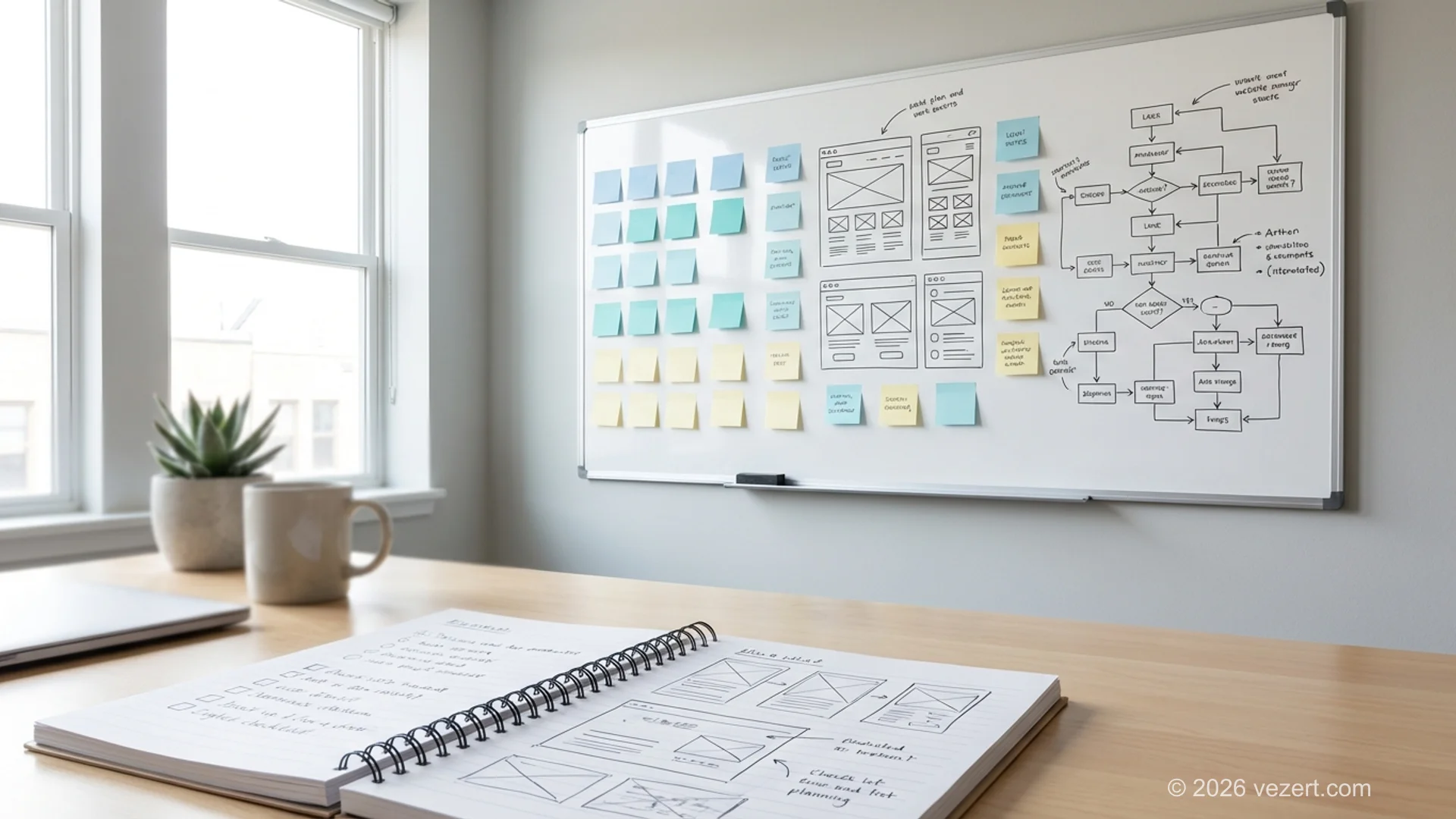
A typical website development timeline includes discovery, UX planning, development, testing, and launch preparation. Skipping or compressing any stage often leads to delays later. Each phase builds on the previous one — strong discovery reduces scope changes, structured UX prevents costly redesigns, and thorough testing ensures stable performance.
Website Development Timeline by Project Type
The answer to the question "How long does it take to build a business website?" depends on the type of project. Different website formats require different levels of planning, development, and testing. Understanding these differences is essential for setting realistic expectations for your project schedule.
Landing Page Timeline
A landing page is typically the quickest format due to its focused scope.
Typical characteristics:
- One main goal or campaign
- Limited number of sections and templates
- Minimal third-party integrations
- Fast approval cycles
The development timeline for landing pages is shorter because the structure is simple and the scope is well-defined.
Corporate Website Timeline
A corporate website requires more planning and cross-team coordination.
Typical characteristics:
- Multiple pages, templates, and navigation structures
- Content strategy and information architecture
- SEO implementation and performance optimization
- Integration with marketing and analytics tools
The timeline is longer because the project involves brand strategy, content workflows, and a broader scope of website development.
Web Portal Timeline
A web portal is closer to a digital product than a marketing website.
Typical characteristics:
- User accounts, roles, and dashboards
- Integrations with external systems and APIs
- Complex backend logic and data handling
- Increased security, testing, and compliance requirements
Portals have the longest development timeline because of complexity, integration depth, and scale. They require more phases and extensive testing and validation.
| Site Turu | Tipik Sure | Temel Asamalar | Karmasiklik |
|---|---|---|---|
| Landing Page | 2-4 hafta | Kesif, Tasarim, Gelistirme, Lansman | Dusuk |
| Kurumsal Web Sitesi | 6-12 hafta | Kesif, UX/UI, Gelistirme, Icerik, Test, Lansman | Orta |
| Web Portal | 12-24+ hafta | Kesif, UX/UI, Mimari, Gelistirme, Entegrasyon, Test, Lansman | Yuksek |
| E-ticaret Platformu | 10-20 hafta | Kesif, UX/UI, Gelistirme, Odeme Entegrasyonu, Test, Lansman | Orta-Yuksek |
Onemli Cikaris
Web sitesi turu ne kadar karmasiksa, o kadar fazla planlama, gelistirme ve test gerekir. Zaman beklentilerinizi her zaman proje turuyle uyumlayiniz.
What Affects Website Development Time the Most
Many businesses focus on the final deadline, but the more important question is what actually influences the project duration. Several practical factors have a direct impact on project duration and how smoothly the process goes.
Understanding the factors that affect website development time helps businesses plan realistically and avoid unnecessary delays.
Project Complexity and Integrations
Project complexity is one of the largest timeline drivers. The more functionality and integrations required, the longer the development phase takes.
Common complexity factors:
- Custom features and interactive functionality
- Third-party integrations (CRM, analytics, payment gateways)
- User accounts, roles, and dashboards
- Custom backend logic and API development
Complex functionality requires more planning, development sprints, and testing, which extends the project timeline significantly.
Client Feedback and Approval Speed
Feedback and approval cycles have a significant impact on project velocity. Even well-planned projects stall when approvals are slow.
Typical delay sources:
- Late feedback on design mockups or prototypes
- Multiple stakeholders with conflicting opinions
- Changing requirements during the development phase
Fast and structured feedback keeps the web design project timeline predictable.
Content Readiness
Content availability is often underestimated but has a strong impact on the overall timeline.
Common content-related delays:
- Missing or incomplete website copy
- Delayed delivery of images, videos, or branding materials
- Frequent content revisions during development
Having content prepared before development begins means the team can proceed without interruption, making post-launch website optimization easier as well.
Testing and Quality Requirements
Thorough testing protects quality but requires dedicated time in the schedule.
Testing typically includes:
- Cross-device and cross-browser validation
- Performance testing and Core Web Vitals optimization
- Integration, functionality, and regression testing
- Accessibility and WCAG compliance checks
Projects with higher quality standards need more extensive testing phases but carry less post-launch risk and enable better conversion optimization.
Understanding these factors helps businesses manage expectations and work more effectively with a web design agency throughout the project lifecycle.
Common causes of website project delays include unclear or changing requirements, late content delivery, slow feedback and approval cycles, scope creep during development, and insufficient testing time. One of the most dangerous risks is underestimating the preparation phase — when discovery or content creation is rushed, problems surface later and push the entire project schedule back.

Common Reasons Website Projects Get Delayed
Even with an organized process, many projects experience delays. Understanding common website project delays and risks helps businesses prevent issues before they derail the project schedule.
Common causes of delays include:
- Unclear or frequently changing project requirements
- Late delivery of content and branding materials
- Slow feedback and approval cycles from stakeholders
- Scope creep during the development phase
- Complex integrations discovered late in the process
- Insufficient time allocated for QA testing
- Lack of internal alignment among decision-makers
One of the most common dangers is underestimating the preparation phase. When discovery, planning, or content creation is rushed, problems surface later and push the entire timeline back. According to industry research, scope changes during development are responsible for timeline overruns in a majority of web projects.
Identifying these risks early enables businesses to plan realistically and collaborate more effectively with their web design agency. A proactive approach to risk management — including clear documentation, defined approval workflows, and milestone-based reviews — keeps the project on schedule.
How AI-Powered Development Shortens the Timeline
Modern AI-powered development helps improve efficiency across the website development timeline while maintaining quality. AI tools support repetitive and data-heavy tasks so that teams can focus on strategy, problem-solving, and implementation.
AI helps shorten the overall project timeline in the following ways:
- Automating repetitive development and code generation tasks
- Assisting with automated testing and bug detection
- Accelerating content analysis and structure validation
- Increasing consistency across templates and components
- Helping teams identify risks and bottlenecks earlier in the process
This support reduces manual workload and shortens iteration cycles. Faster iterations enable teams to validate ideas sooner and refine solutions before launch.
AI also improves predictability. By assisting with code review, testing automation, and workflow optimization, teams spot potential problems earlier and reduce the number of unexpected delays. This contributes to a more stable web design project timeline.
Importantly, AI assists with execution but does not replace expert decision-making. Human oversight ensures that speed does not compromise usability, accessibility, or conversion optimization. The combination of AI efficiency and human expertise creates the best outcome for project delivery.
Web Projenizi Planlayin
Kapsam, strateji ve yapilandirilmis uygulamaya dayali gercekci bir web sitesi gelistirme sureci elde edin.
Sureyi GoruselimHow a Web Design Agency Builds a Realistic Timeline
Creating an accurate website development timeline takes experience, organization, and clear communication. A professional web design agency builds timelines based on scope, complexity, and actual project workflows rather than assumptions.
Planning starts with understanding business objectives, project requirements, and expected outcomes. This enables the team to divide the project into realistic phases with clear milestones.
A structured planning approach usually involves:
- Defining scope and priorities during discovery
- Breaking the project into clear milestones with deliverables
- Allocating time for feedback and approval rounds
- Scheduling testing, QA, and pre-launch preparation
- Accounting for post-launch website optimization
The Vezert web design agency follows a structured, business-oriented process that ensures realistic expectations and reduced project risks. From initial consultation through development and launch, every phase has defined deliverables and timelines.
Careful planning is essential to ensure the project schedule supports quality, stability, and long-term business growth. When the agency and the client share a clear roadmap, the project moves forward with fewer surprises and stronger results.
Practical Checklist to Keep Your Website Development Timeline on Track
Use this checklist to make your project schedule predictable and minimize common risks.
Before the project starts:
- Identify clear business goals and success metrics
- Prepare a project scope document with feature requirements
- Choose a structured and experienced web design agency
- Draft a website design brief with brand guidelines
During discovery and planning:
- Provide branding materials and brand assets in advance
- Connect internal stakeholders and decision-makers early
- Establish a communication cadence and feedback process
During design and development:
- Deliver website content on schedule
- Provide structured and timely feedback at each milestone
- Avoid major scope changes mid-project
Before launch:
- Allow sufficient time for testing and bug fixing
- Validate all integrations and functionality
- Plan the post-launch website optimization strategy
Following this checklist helps minimize website project delays and risks while achieving better collaboration with your development partner throughout the entire project.
Final Thoughts on the Website Development Timeline
Professional website development is not a one-step task. It is a structured process that incorporates planning, design, development, testing, and launch preparation. When businesses understand the complete website development timeline, they can set realistic expectations and avoid unnecessary pressure.
Planning is critically important. Clear goals, a defined scope, and aligned stakeholders minimize risks and enable predictable delivery. Without proper preparation, even simple projects face delays that extend the delivery schedule.
Partnership matters just as much. Working with a structured web design agency provides confidence that the project follows a defined process and that potential issues are addressed early. A strong agency relationship turns the timeline from a source of stress into a shared roadmap.
Finally, launch is not the end. Ongoing website optimization ensures the website continues to perform, adapt, and contribute to business growth over time. The best project plan accounts for what happens after go-live, not just before it.
Bu Sayfada
- Web sitesi gelistirme surecleri neden farklidir
- Web sitesi gelistirme sureci: asamalar
- Proje turune gore web sitesi gelistirme suresi
- Web sitesi gelistirme suresini en cok ne etkiler
- Web projelerinde gecikmelerin yaygin nedenleri
- AI destekli gelistirme sureyi nasil kisaltir
- Bir web tasarim ajansi gercekci zaman cizelgesi nasil olusturur
- Web sitesi gelistirme surecini takip etmek icin kontrol listesi
- Web sitesi gelistirme sureci hakkinda son dusunceler