


Auf dieser Seite
- Kernprinzipien hochkonvertierender Webseiten-Designs 2026
- Anatomie einer perfekten Webseite: Schlüsselelemente
- Webseiten-Design 2026 vs. 2024: Was hat sich geändert
- UX/UI-Best-Practices für konvertierendes Webseiten-Design
- Visuelles Design, das verkauft: Farbe, Typografie und Bilder
- Der Vezert-Prozess: Hochkonvertierende Webseiten mit KI
- Ihr Blueprint für erfolgreiches Webseiten-Design 2026
Ihre Website sieht beeindruckend aus, aber treibt sie tatsächlich das Wachstum voran? Viele Unternehmen investieren stark in schöne Ästhetik, nur um sich zu fragen, warum die Lead-Pipeline versiegt und die Umsätze stagnieren. Diese frustrierende Kluft zwischen einer gut aussehenden und einer leistungsstarken Website ist der Punkt, an dem die meisten digitalen Investitionen scheitern. Die Wahrheit ist: Das beste Webseiten-Design 2026 geht nicht nur um Aussehen — es geht um Ergebnisse. Wenn Sie es leid sind, in eine Website zu investieren, die keinen klaren ROI liefert, sind Sie hier richtig.
In diesem ultimativen Guide zum Webseiten-Design für 2026 gehen wir über kurzlebige Trends hinaus, um die Wissenschaft der Conversion zu entschlüsseln. Sie werden die Kernprinzipien, psychologischen Trigger und wesentlichen UX/UI-Elemente entdecken, die passive Besucher in treue Kunden verwandeln. Wir liefern einen definitiven Blueprint für ein hochkonvertierendes digitales Erlebnis.

Kernprinzipien hochkonvertierender Webseiten-Designs 2026
In der wettbewerbsintensiven digitalen Landschaft ist eine visuell beeindruckende Website, die nicht konvertiert, nur ein digitales Plakat in der Wüste. Wir setzen auf die Philosophie des Conversion-First-Designs, bei dem jeder Pixel einem Zweck dient. Diese Methodik konzentriert sich auf grundlegende Webdesign-Prinzipien, die messbaren ROI generieren. Um das beste Webseiten-Design für Wachstum 2026 zu schaffen, müssen Sie die Wissenschaft des Einflusses beherrschen.
Klarheit und Einfachheit: Das Fundament des Handelns
Ein verwirrter Verstand konvertiert nie. Der Eckpfeiler einer leistungsstarken Landing Page ist absolute Klarheit. Dies beginnt mit einem einzigen Ziel — eine Seite, ein primäres Ziel. Wir nutzen strategischen Weißraum, um die kognitive Belastung zu reduzieren.
Visuelle Hierarchie: Den Nutzer zur Conversion führen
Effektives Design ist ein Gespräch, und die visuelle Hierarchie bestimmt den Verlauf. Baymard-Institutes UX-Forschung liefert umfangreiche Belege für den Einfluss visueller Scanmuster auf Klickraten.
Nutzerzentrierung: Design für Ihren Kunden
Sie sind nicht Ihr Nutzer. Der kritischste Fehler in Webseiten-Design-Best-Practices ist das Gestalten nach persönlichen Vorlieben. Echte Optimierung kommt vom tiefen Verständnis Ihrer Zielgruppe.
Wichtige Erkenntnis
Das beste Webseiten-Design 2026 basiert auf drei Säulen: Klarheit des Zwecks, visuelle Hierarchie, die Nutzer zu CTAs führt, und nutzerzentriertes Denken. Wenn diese drei Prinzipien zusammenwirken, verbessern sich Conversion-Raten konstant um 30-50%.
Anatomie einer perfekten Webseite: Schlüsselelemente
Eine hochkonvertierende Landing Page ist keine Magie; sie ist eine kalkulierte Mischung aus Psychologie und strategischem Design. Das Verständnis ihrer Anatomie ist fundamental für die Umsetzung der Webseiten-Design-Best-Practices.
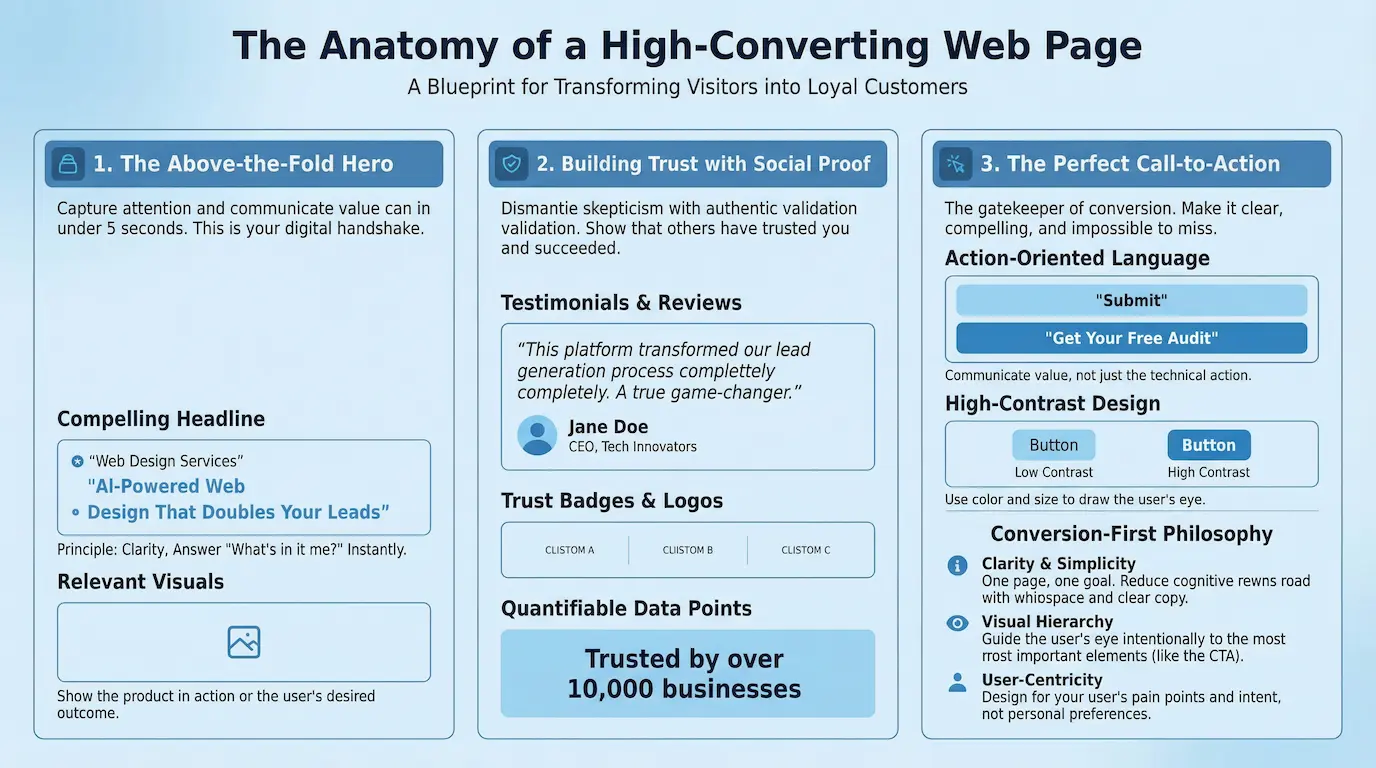
Die Hero-Sektion oberhalb des Folds
- Überzeugender Headline: Statt „Webdesign-Dienstleistungen" verwenden Sie „KI-Webdesign, das Ihre Leads verdoppelt".
- Relevantes Hero-Bild oder Video: Hochwertige Visuals, die Ihr Produkt in Aktion zeigen.
- Prominenter primärer CTA: Der Nutzer muss sofort wissen, was zu tun ist.
Der überzeugende Call-to-Action (CTA)
Ihr CTA ist der Gatekeeper der Conversion. Verwenden Sie starke, handlungsorientierte Sprache, unterstützt durch Usability-Richtlinien.
Vertrauensaufbau durch Social Proof
- Testimonials: Direkte Zitate echter Kunden.
- Vertrauenszeichen: Logos bekannter Kunden, Auszeichnungen.
- Datenpunkte: „Über 10.000 Unternehmen vertrauen uns."
Erkunden Sie unser Portfolio für reale Beispiele hochkonvertierender Landing Pages.
KI-Webseiten-Design, das Ihre Leads verdoppelt
Wir bauen hochkonvertierende Websites mit unübertroffener Geschwindigkeit und Präzision. Transparente Preise und schnelle Lieferung.
Projekt startenWebseiten-Design 2026 vs. 2024: Was hat sich geändert
Die Webseiten-Design-Landschaft hat sich zwischen 2024 und 2026 erheblich weiterentwickelt. Hier erfahren Sie, was sich geändert hat und warum es für Ihr nächstes Projekt wichtig ist.
Nicht zurückfallen
Wenn Ihre Website noch den Design-Standards von 2024 folgt, riskieren Sie, gegenüber Wettbewerbern zurückzufallen, die die Webseiten-Design-Best-Practices von 2026 bereits übernommen haben. Der Wechsel zu KI-Entwicklung, Mobile-First-Layouts und Sub-Sekunden-Performance ist kein optionales Upgrade — er ist der neue Grundstandard.
UX/UI-Best-Practices für konvertierendes Webseiten-Design
UX und UI sind zwei verschiedene Disziplinen, die zusammen das technische Rückgrat jeder konvertierenden Landing Page bilden. In Kombination verwandelt optimales UX/UI-Design eine schöne Seite in eine Hochleistungs-Conversion-Maschine.
Intuitive Navigation und Struktur
Dieser Klarheitsprinzip ist ein Eckpfeiler der Barrierefreiheits- und Usability-Standards:
- Einfache Menüs: Nur wesentliche Links zum Hauptziel.
- Logischer Fluss: Hierarchische Inhaltsstruktur.
- Klare Orientierung: Breadcrumbs und sauberer Footer.
Mobile-First und responsives Webseiten-Design
Bis 2026 ist Mobile-First-Design unverzichtbar. Laut Google web.dev-Richtlinien beeinflusst die mobile Seitenerfahrung direkt die Suchrang-Position.
Performance und Ladegeschwindigkeit
Jede Sekunde zählt. Selbst eine Verzögerung von einer Sekunde kann Conversions um bis zu 7% reduzieren. Optimieren Sie alles für maximale Geschwindigkeit.
Visuelles Design, das verkauft: Farbe, Typografie und Bilder
Die besten Webseiten-Design-Praktiken 2026 stellen sicher, dass jedes visuelle Element zur Conversion beiträgt.
Farbpsychologie im Webseiten-Design
Farbe beeinflusst direkt, wie Nutzer denken und handeln. Wir wenden die 60-30-10-Regel an. Smashing Magazine zeigt, dass strategischer Farbeinsatz Klickraten um 15-25% verbessern kann.
Typografie, die Vertrauen aufbaut
- Lesbarkeit priorisieren: Saubere, web-optimierte Schriften wie Inter, Open Sans oder Lato.
- Hierarchie etablieren: Größe, Gewicht und Stil zur Unterscheidung.
- Auswahl begrenzen: Maximal zwei bis drei Schriftfamilien.
Strategischer Einsatz von Bildern und Icons
Verwenden Sie authentische Bilder Ihres Teams, Produkts oder echter Kunden.
Bei Vezert stellt unser KI-Ansatz sicher, dass Ihre Landing Page für Ergebnisse optimiert ist. Sehen Sie unsere Preise.
Profi-Tipp: Der 5-Sekunden-Test
Zeigen Sie Ihre Webseite jemandem für fünf Sekunden und fragen Sie dann, worum es geht und welche Aktion ausgeführt werden soll. Wenn die Antworten nicht stimmen, brauchen visuelle Hierarchie und Botschaft Verbesserung. Dieser einfache Test ist eine der effektivsten Webseiten-Design-Validierungstechniken.
Transformieren Sie Ihr Webseiten-Design noch heute
Schließen Sie sich Hunderten von Unternehmen an, die auf Conversion-First-Design umgestiegen sind. Unser KI-Prozess liefert Ergebnisse in Wochen, nicht Monaten.
Kostenlose Beratung
Ihr Blueprint für erfolgreiches Webseiten-Design 2026
Mit Blick auf 2026 ist klar: Hochwertiges Webdesign ist mehr als Ästhetik. Die Zukunft gehört Seiten, die auf datengetriebenem UX, überzeugenden Visuals und unermüdlichem Conversion-Fokus aufgebaut sind.
Bei Vezert folgen wir nicht nur Trends — wir setzen sie. Unsere Verpflichtung zu transparenter Preisgestaltung und schneller Lieferung beseitigt Unsicherheit.
Bereit für eine Website, die Besucher in loyale Kunden verwandelt? Kostenlose Webseiten-Design-Beratung heute. Erkunden Sie auch unsere Services oder unseren Blog.
Auf dieser Seite
- Kernprinzipien hochkonvertierender Webseiten-Designs 2026
- Anatomie einer perfekten Webseite: Schlüsselelemente
- Webseiten-Design 2026 vs. 2024: Was hat sich geändert
- UX/UI-Best-Practices für konvertierendes Webseiten-Design
- Visuelles Design, das verkauft: Farbe, Typografie und Bilder
- Der Vezert-Prozess: Hochkonvertierende Webseiten mit KI
- Ihr Blueprint für erfolgreiches Webseiten-Design 2026


Der Vezert-Prozess: Hochkonvertierende Webseiten mit KI
Bei Vezert haben wir einen Conversion-First-Prozess entwickelt, der die besten Praktiken in einen umsatzgenerierenden Asset verwandelt. Unser Webseiten-Design-Prozess ist für 2026 und darüber hinaus konzipiert.
Schritt 1: Conversion-fokussierte Strategie und UX
Wir tauchen tief in Ihre Geschäftsziele ein. Unser UX/UI-Design-Service basiert auf forschungsgetriebener Methodik.
Schritt 2: Datengetriebenes UI und visuelles Design
Unser Team übersetzt die Strategie in ein pixelgenaues Interface.
Schritt 3: KI-gestützte Entwicklung und Launch
Unsere KI-Agenten schreiben sauberen, W3C-konformen Code:
Entdecken Sie unsere Unternehmenswebseiten und Webportal-Services.
Bereit für eine Seite, die konvertiert? Projekt starten.